Blog and news
Through the eyes of a Bermudian: Chathams conservation (Part Two)
On the final leg of his Chatham Islands adventure, Miguel Mejías helps translocate seabird chicks from a black robin refuge to the main Chatham Island. He leaves the islands with new skills - and a reinforced resolution to support the restoration of his home islands, Bermuda. You can read Part One here.
Helping restore a seabird colony
My second big adventure with the Chatham Islands Landscape Restoration Trust was taking part in a seabird translocation, a project led by the Hokotehi Moriori Trust.
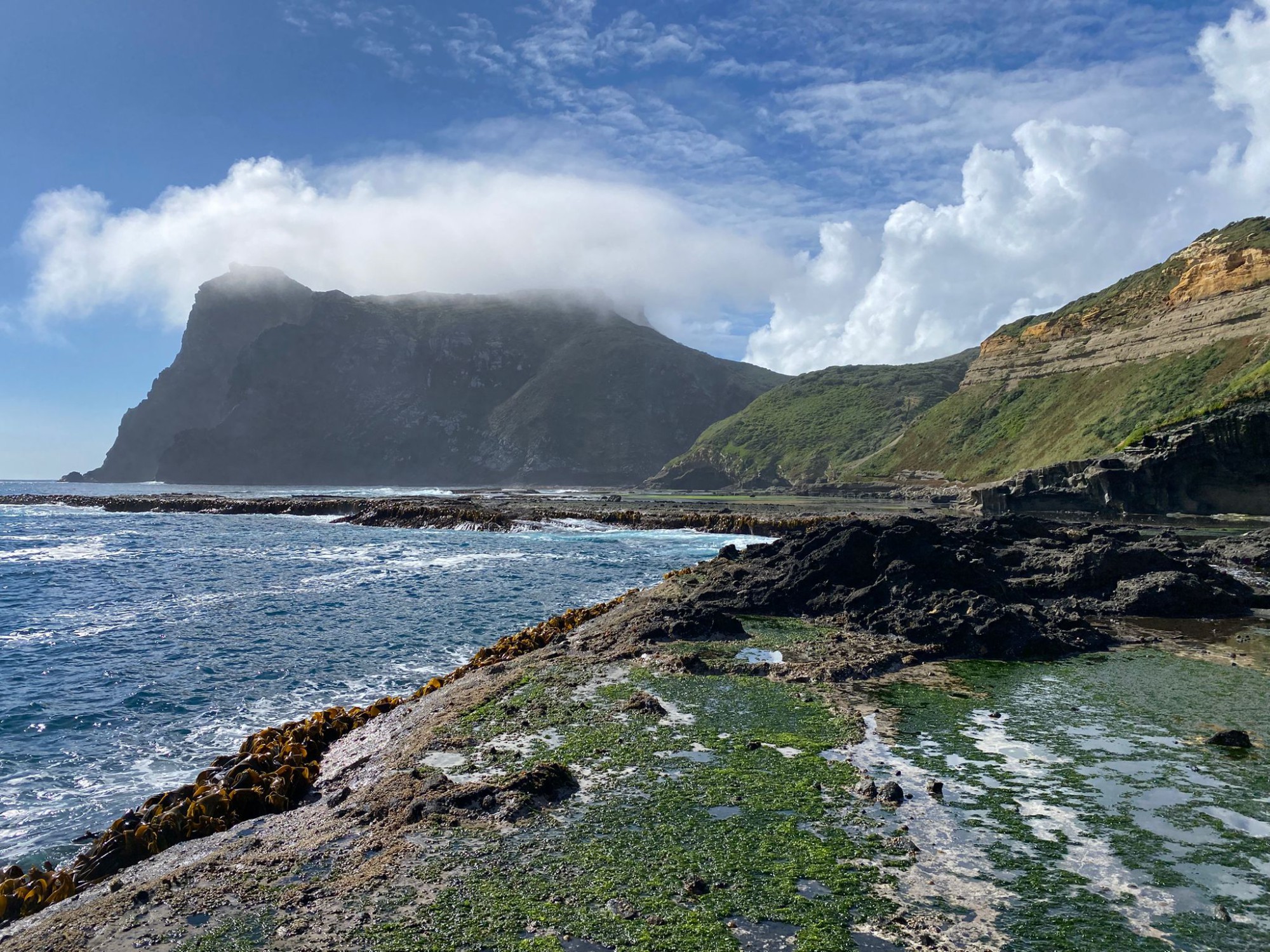
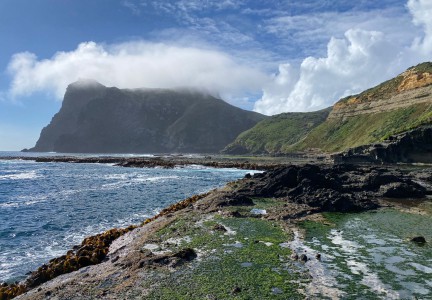
Arrival on Mangere Island. Image: Miguel Mejías
Seabird translocations are a commonly used conservation strategy for establishing new seabird breeding colonies at alternative sites. Near-fledged chicks are taken from their natal burrow and relocated to a different nesting site, so that fledglings imprint on and return to the translocated site as breeding adults. Seabird translocations also proved successful with cahows.
For this expedition, our target species were near-fledgling sooty shearwaters/ hakoakoa/ tītī (Ardenna grisea), a culturally significant species on the Chatham Islands. Tītī were historically abundant on main Chatham Island, but predation from introduced predators significantly reduced their range. As of 2026, the majority of surviving tītī breed in large numbers on the offshore predator-free islands.
This translocation was the second in the project, and planned to remove 50 tītī chicks from Mangere/ Maung’Re Island and translocate them to a coastal area in Kaingaroa, where 50 empty artificial nest burrows were ready to accept the chicks. Several years of tītī translocations, coupled with the ongoing trapping efforts described previously, should help restore the tītī population to this main island site.
Following the quarantine protocols of DOC, which I knew all too well, our team of 12 assembled at Waitangi Wharf, where we departed for Mangere. Just over an hour later, we disembarked on the southern side of Mangere.
With all our gear in hand, we hiked some 300 meters up a very steep, forested hill to the Mangere hut. Hamish and I took a couple breaks on the ascent, the former unknowingly carrying my heavy gear bag on his back!
After settling in, Mike informed me there was one more important thing we must do before collecting tītī: find me a black robin, the very bird I had planned to assist DOC with before those plans were cancelled. Mangere was my chance to see one.
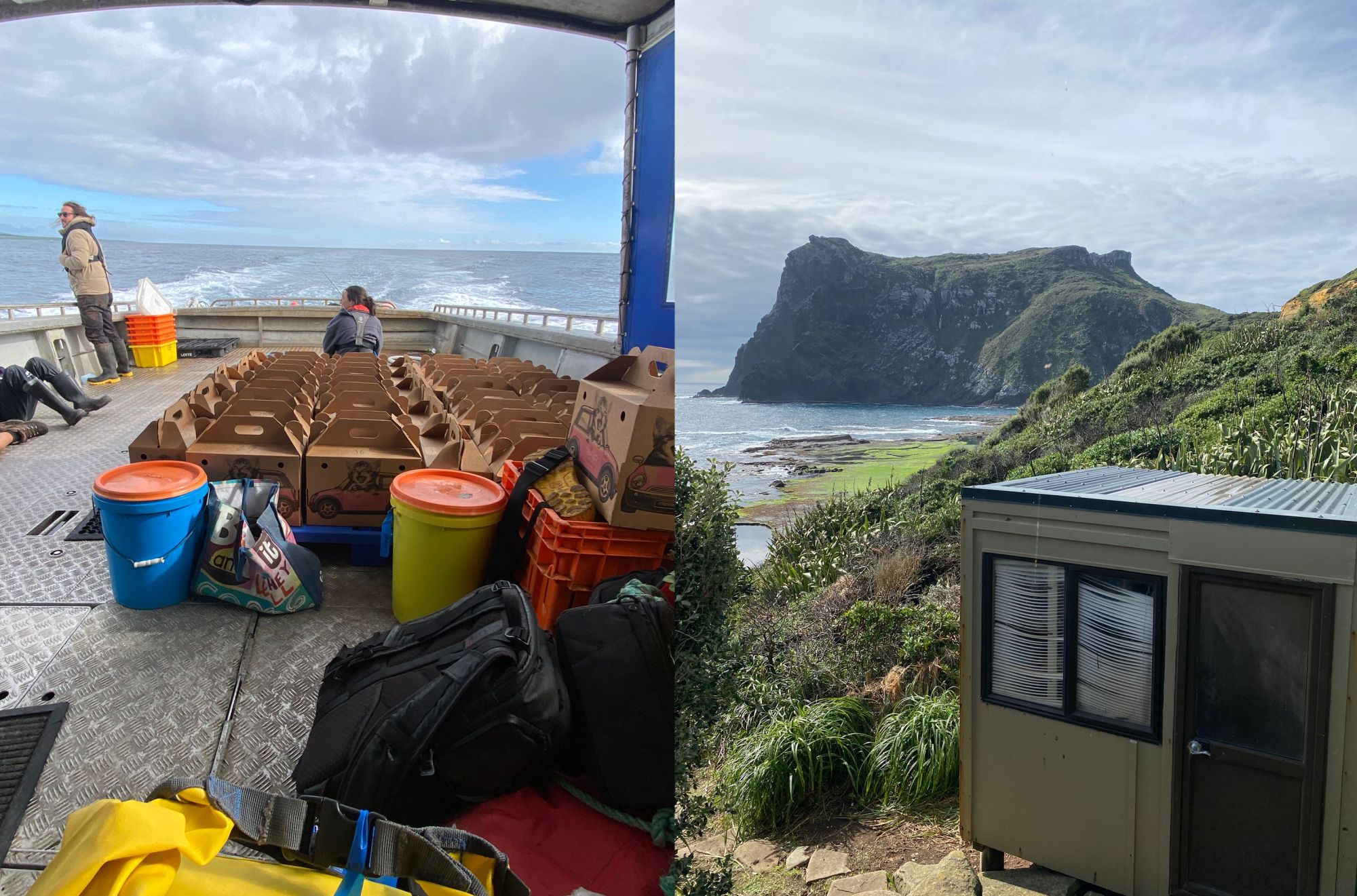
Travelling to Mangere by boat, and looking out from the hut. Images: Miguel Mejías
The black robin pilgrimage
Mike and Levi Lanauze, the Chief Executive of the Hokotehi Moriori Trust, lead a small group of us on a 2-hour hike to the infamous Robin Bush, where the rare endemic bird lives, a walk I jokingly described as “a pilgrimage.”
I must confess, this was by far the most difficult terrain I had ever walked in my entire life. If you ever need to work on your cardio, take a trip to the Chats! Nonetheless, the views from the various peaks and valleys on Mangere were stunning.
Once at Robin Bush, it took my eyes time to adjust to the darkness cast by the thick canopy. Large limestone boulders were scattered amongst the forest floor.
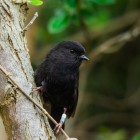
“There’s one!” exclaimed Mike. At long last, there it was: the black robin. I took out my camera, which struggled to distinguish the dark background from the even darker black robin. The bird was so tame, others were getting close shots with their cell phones! The robin was practically hopping on our footwear. Before long, a second one appeared. Our group enjoyed their presence for about an hour.
With Mike’s promise kept, it was now time to get down to business.
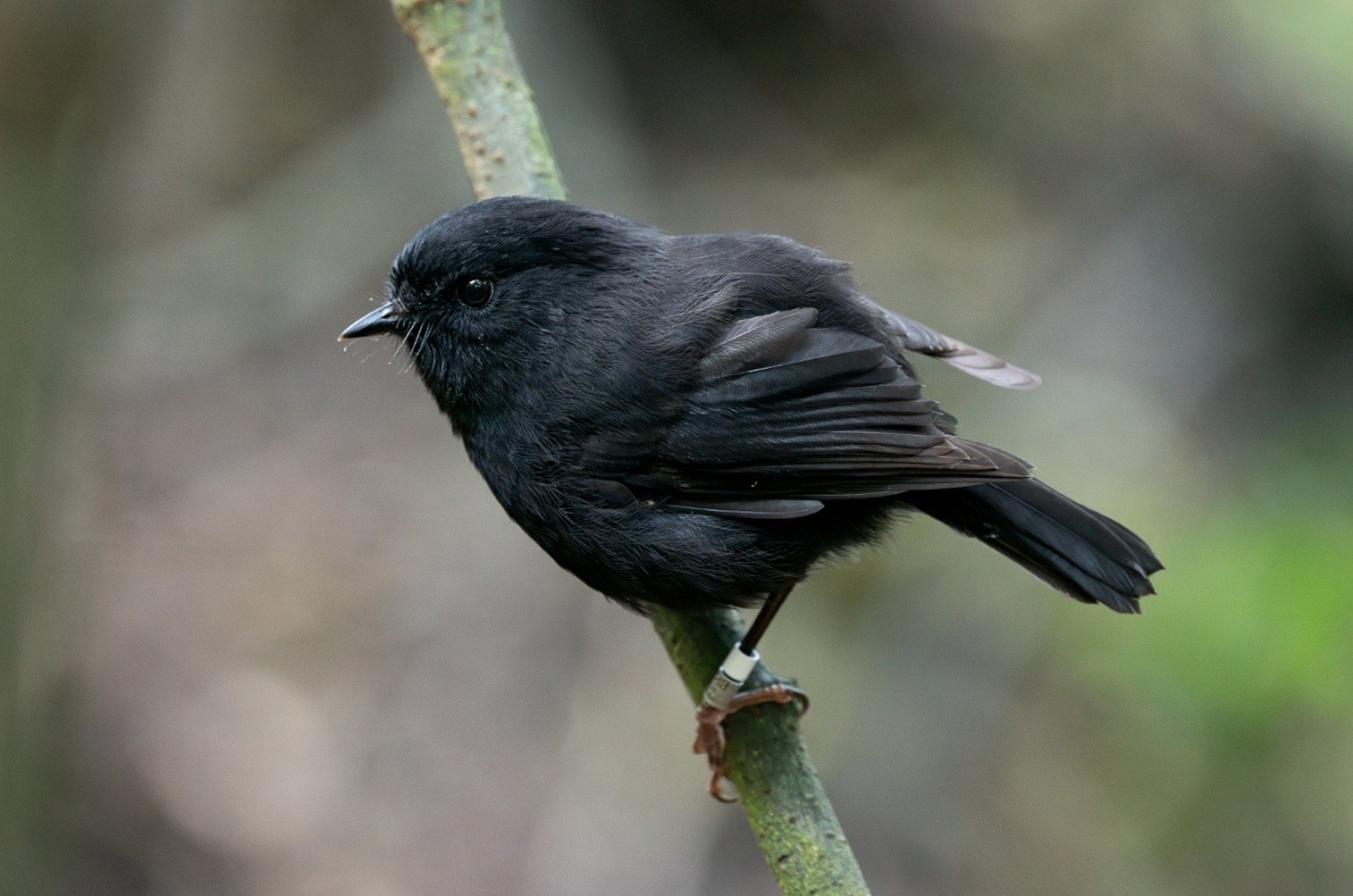
The endemic black robin of the Chatham Islands. Almost all individuals in the population are color-banded, which helps researchers with individual recognition and long-term monitoring. Image: Miguel Mejías
Capturing fluffy, bitey cantaloupes
Capturing tītī fledglings requires a bit of skill. Like tāiko, tītī dig nesting burrows in the soft soil of the forest floor, although their burrows were far more numerous than tāiko. At this time of the year, most chicks are large enough to be left in their burrows unattended by their parents, who return for brief feeding visits under the cover of darkness.
To capture a chick, I laid on the ground, reached my hand as far down into the burrow as I could; most were literally the full length of my arm. The inhabitants of occupied burrows nibbled at my fingers, and this was the window to gently pull them out of their burrow.
The tītī chicks were heavy and round like cantaloupes, except they were fluffy and bit. Indeed, everyone who handled tītī chicks left Mangere with numerous bite marks on their hands. The chicks who were recently fed the previous night jiggled in my hands like large water balloons.
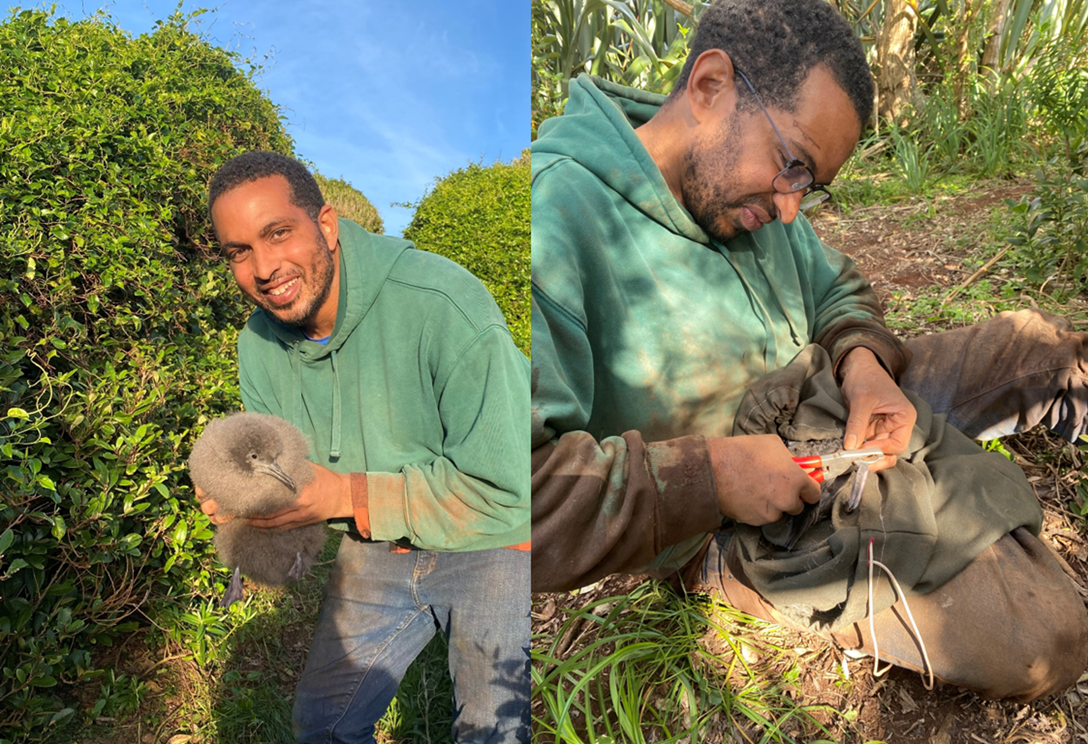
The author holding and banding tītī chicks on Mangere Island.
The 50 chicks we needed for our translocation had to be the right age. Taking older chicks risked translocating birds that had already imprinted on Mangere as their home, and thus would return there instead of the translocation site on Rēkohu Wharekauri. If the chicks were taken too young, we would significantly increase the amount of time needed for hand rearing. Samantha (who oversaw the banding) and I worked together to carefully weigh and measure the wing length of each chick, ensuring they were the appropriate age for our translocation.
By early afternoon the following day, our team had successfully captured 50. Samantha taught me the proper banding technique for tītī. Their bands were larger and made from a different metal than the bands I use in Bermuda. In the end, I banded 30 chicks and Sam banded 20.
After banding, we placed each chick inside numbered cardboard boxes, transferred them and our gear onto the boat, and headed back to Waitangi Wharf. From there, we loaded the boxed birds into vehicles and we drove to the translocation site in Kaingaroa. Finally, each bird was placed inside the burrow number that matched the number on its cardboard box.
Warm sardine smoothies
Since the translocated chicks were no longer in the care of their parents on Mangere, the responsibility of feeding them fell on us.
A few days after the translocation, Mike, Samantha, and I returned to Kaingaroa, where Mike taught us all intricacies of preparing tītī food. He created a warm sardine smoothie to feed chicks via syringe. One by one, each chick had to be removed from its burrow, have its growth assessed, and be fed.
Admittedly, I found tītī feeding challenging for the first couple of birds, as they effortlessly wriggled their heads free from my cautious grip. With some words of encouragement from Mike and Levi, I was finally holding them properly and feeding birds at a faster pace. We returned to Kaingaroa to feed chicks about twice a week.
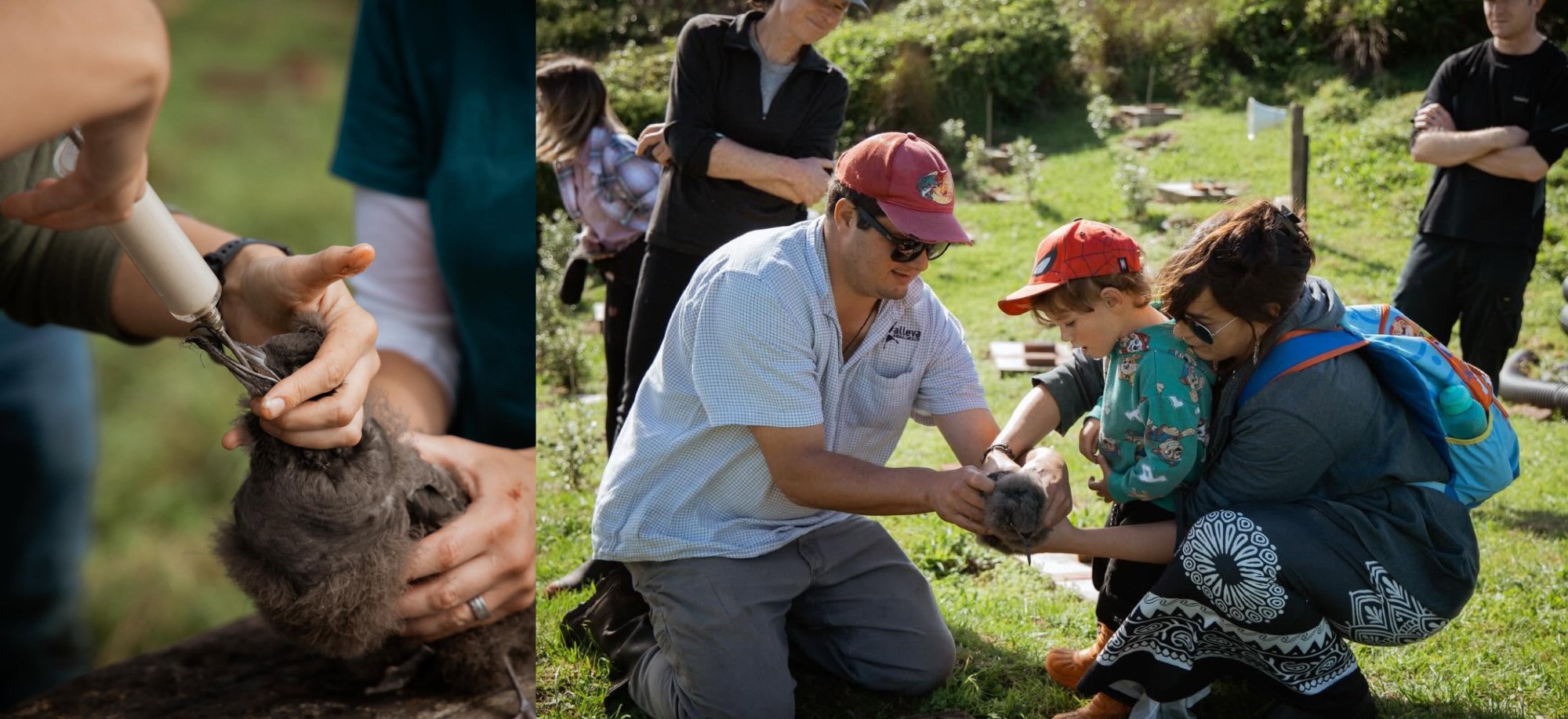
Community attending the hakoakoa/ tītī chick feeding. Images: Hokotehi Moriori Trust
Honestly, my favourite aspect of the tītī feeding was the community involvement. Not only did many of the participants from the Mangere trip return to assist, they also brought additional members of their households. Members of the community, children to adults, from all walks of life, also attended these feeding sessions. I was in awe of the genuine interest the community took in a conservation project that I hadn’t realised would have been of interest to anyone outside of our translocation crew. It was heartwarming, and I felt so privileged to be a part of it all.
Translocating knowledge from one archipelago to another
My Chatham Island trip was without question one of the best trips of my life. In hindsight, I’m happy that my initial plans fell through, because I got to participate in a broader range of conservation activities while learning from some of the most experienced conservationists on the Chathams. This trip has given me new skills, insight, partnerships, and friendships, all of which I know will ultimately benefit my conservation ambitions with Bermuda’s indigenous avifauna.
I also gained a brand-new perception of scale. While conservation work on the seabird islands in Bermuda is by no means easy, my time in the Chathams was a gentle reminder that our islands’ sites in Bermuda are tiny in comparison, and that I should feel empowered at the prospect of looking after the protected species that live there, including our cahows.
In Bermuda, whenever I feel doubt creeping in, or if I feel like things are too difficult, I’ll think of the toughness and rigor I inherited from my friends on the Chatham Islands and push forward.
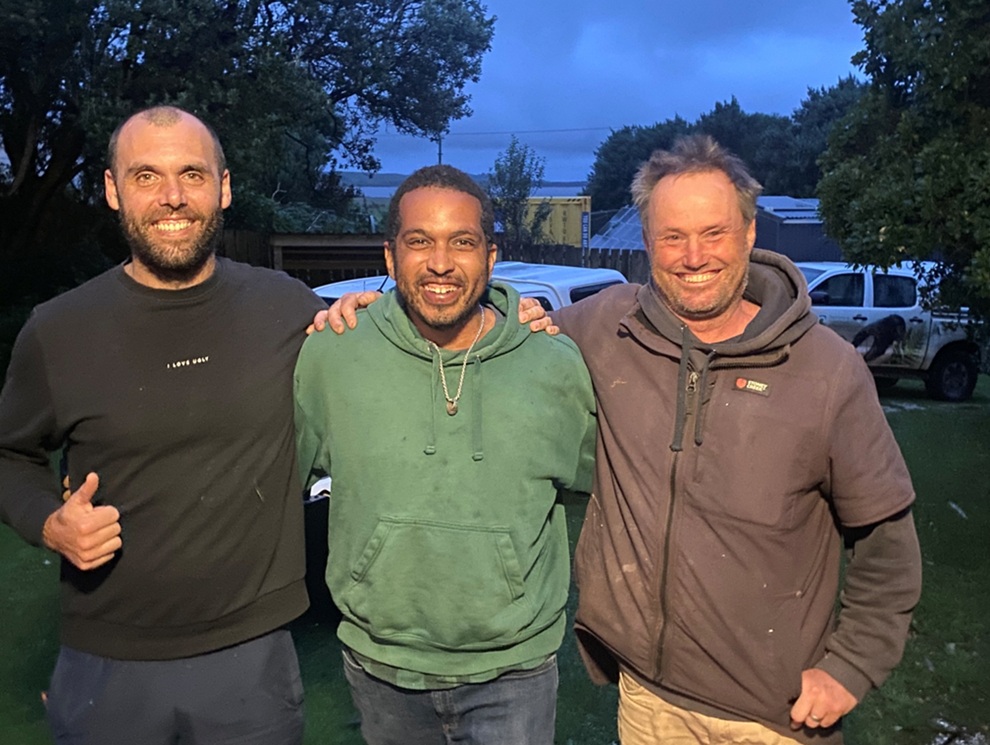
Hamish, Miguel, and Mike at the end of the trip.
ACKNOWLEGEMENTS
Special shoutout to Steve Wood and Bradley Shields for the amazing Chatham Islands birding tour that kicked off my two month stay on the island. Thank you, Megan Lanauze and Glenn King, for providing boat transport and an Airbnb to stay in during the tour period. I also thank DOC for providing me with food and accommodation for most of my time on the Chathams, especially Rangers Kate and Andy, who regularly checked in and drove me to the store! Thank you Jenna Hoverd for organizing a trip to Taiko Camp, as well as Dave Boyle, Jack, and Makenzy for hosting me there. Dave, your mentorship and friendship is much appreciated.
I would like to offer my sincere thanks and gratitude to my new brothers, Mike Bell and Hamish Chisholm, for taking me on as a volunteer for the Chatham Islands Landscape Restoration Trust. I learned so much from you both and you genuinely made my Chatham experience so unforgettable, thank you! Likewise, I owe thanks to Samantha Ray for improving my bird banding technique. I am also grateful to my new friends, Levi and Tessa Lanauze, for giving me food and accommodation, allowing us to conduct predator trapping on their property, and letting me participate in their various conservation projects. Special shoutout to the awesome people that I worked alongside and befriended on Mangere, which include, but is not limited to, Duncan Ryan, Ashleigh Ryan, and Lori Albert.
Last, but not least, I extend my thanks to my loving parents, Albert and Patricia Mejias, who always encouraged me to follow my passions and encouraged me to go on this trip, despite my father’s illness. I love you both immensely… thank you.