Blog and news
Habitat Restoration - World Albatross Day 2026
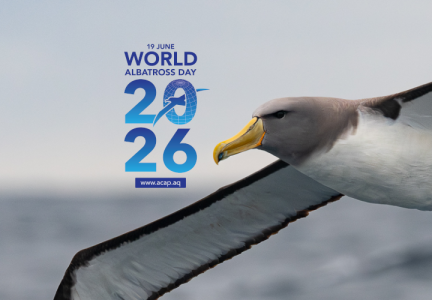
The theme for World Albatross Day 2026 is Habitat Restoration, with a special focus on the Chatham Island albatross and the Atlantic Yellow-nosed albatross. This theme highlights the conservation and habitat management efforts helping to protect these endangered seabirds. Below is an overview of the Chatham Islands’ unique albatross.
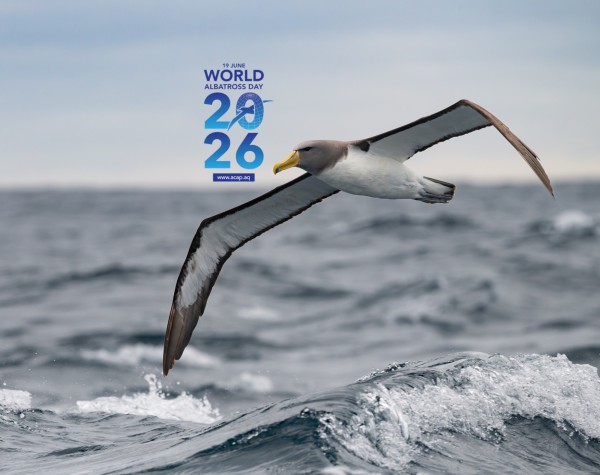
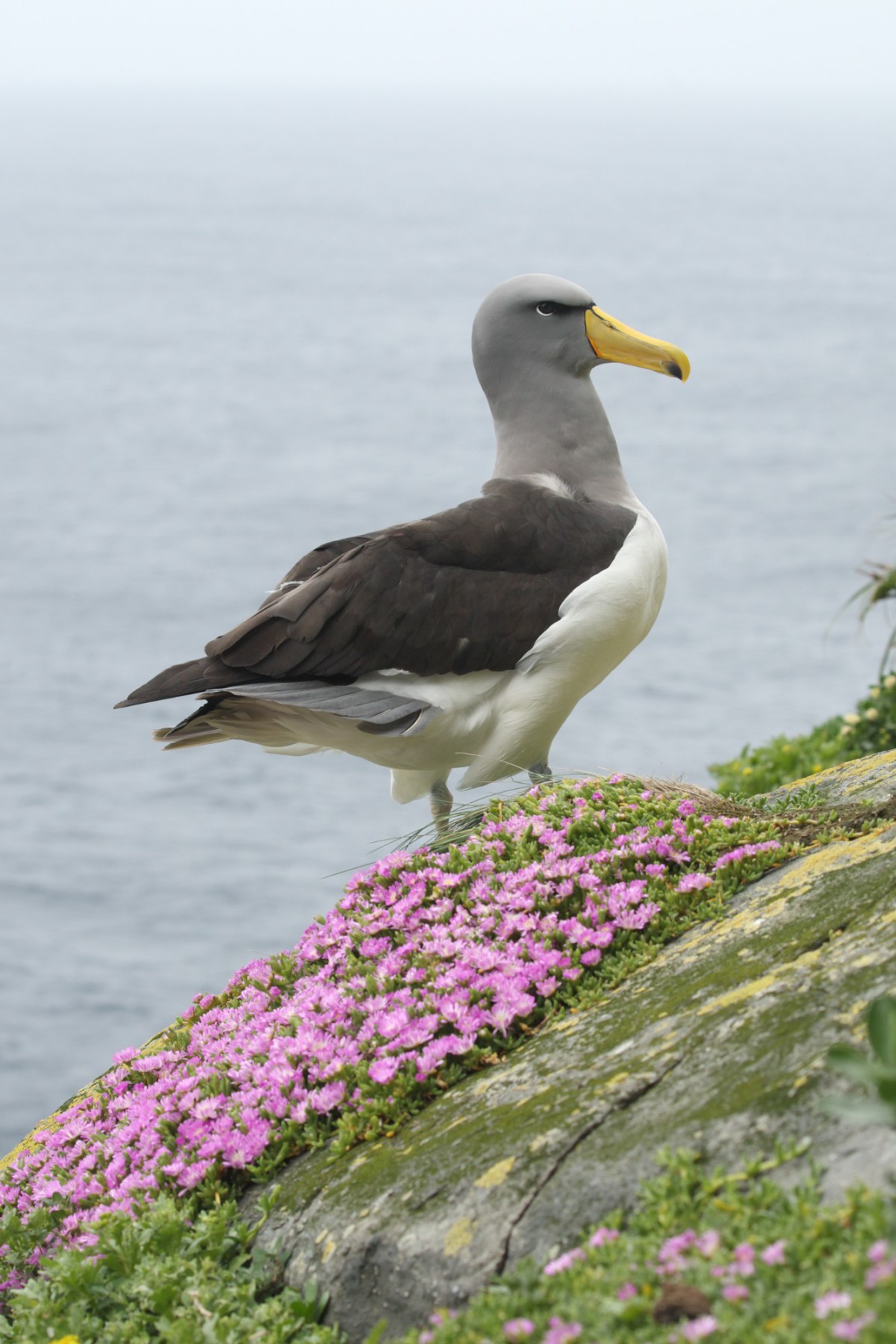
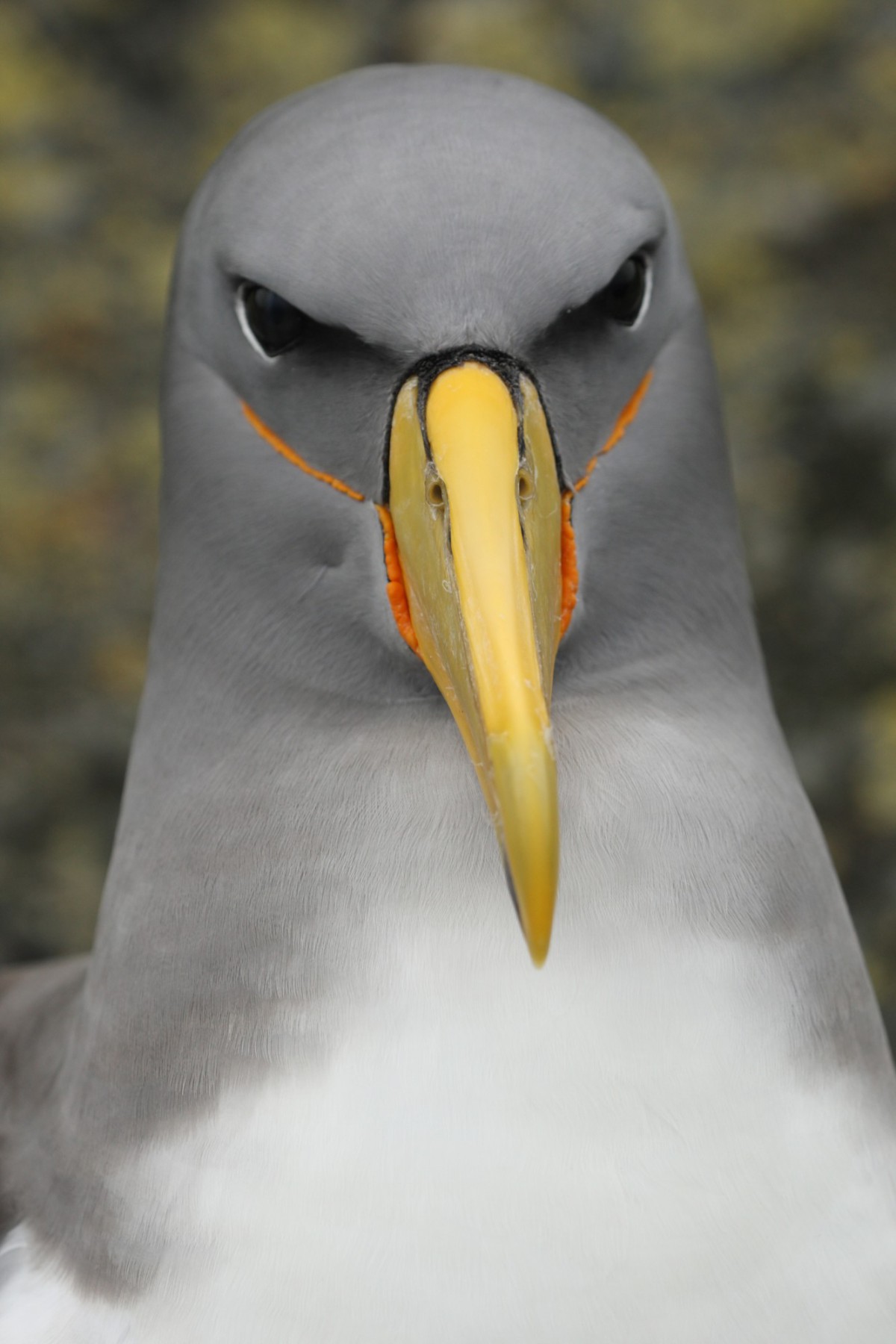
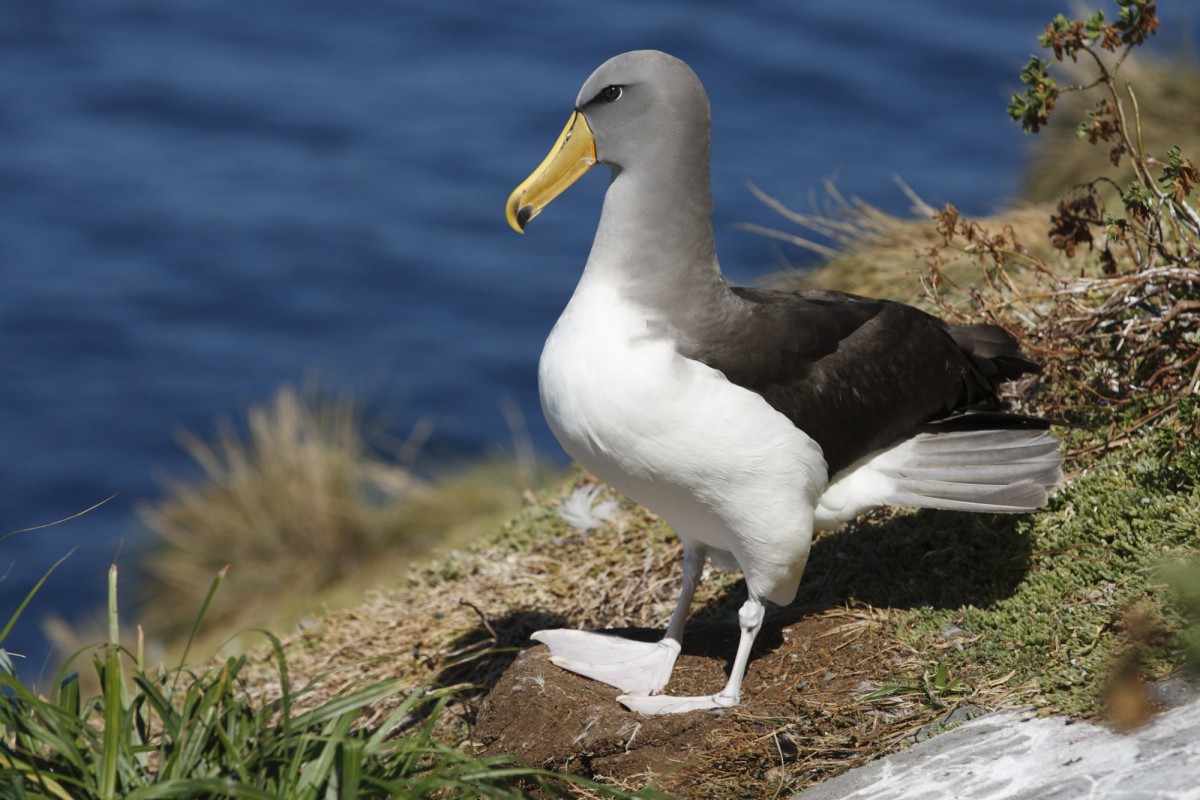
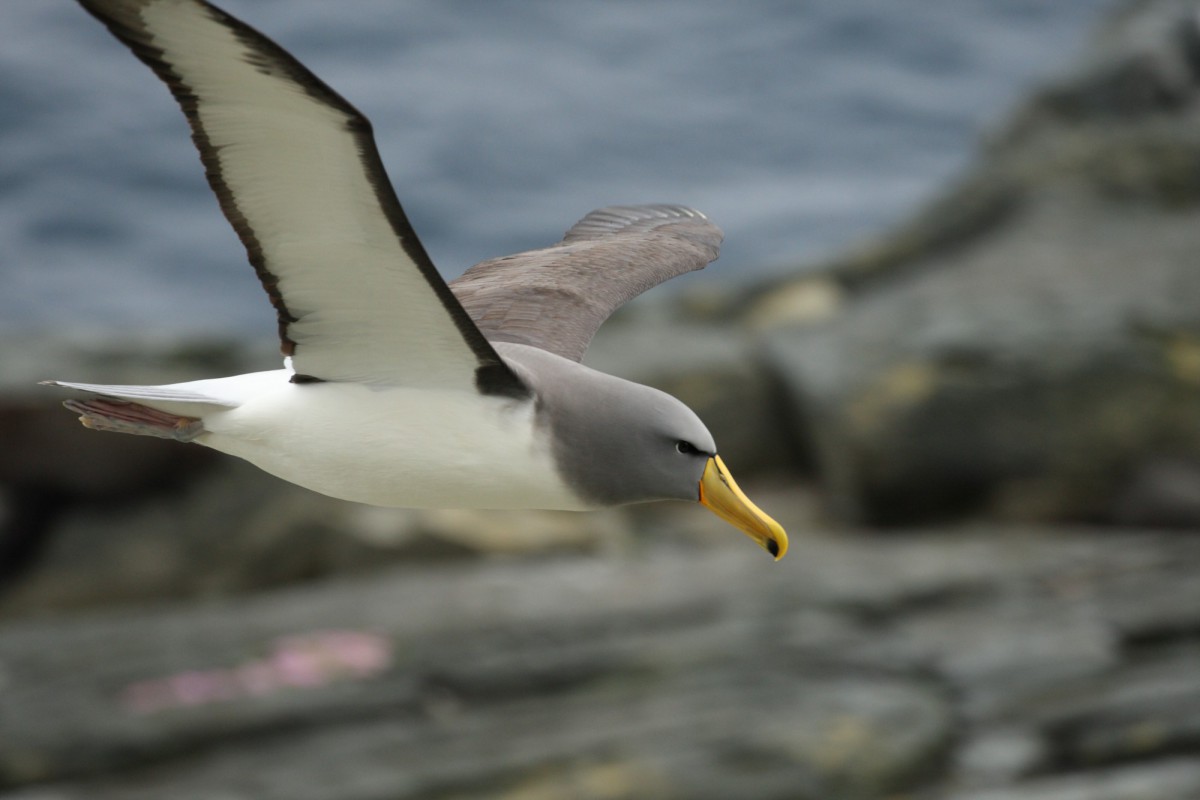
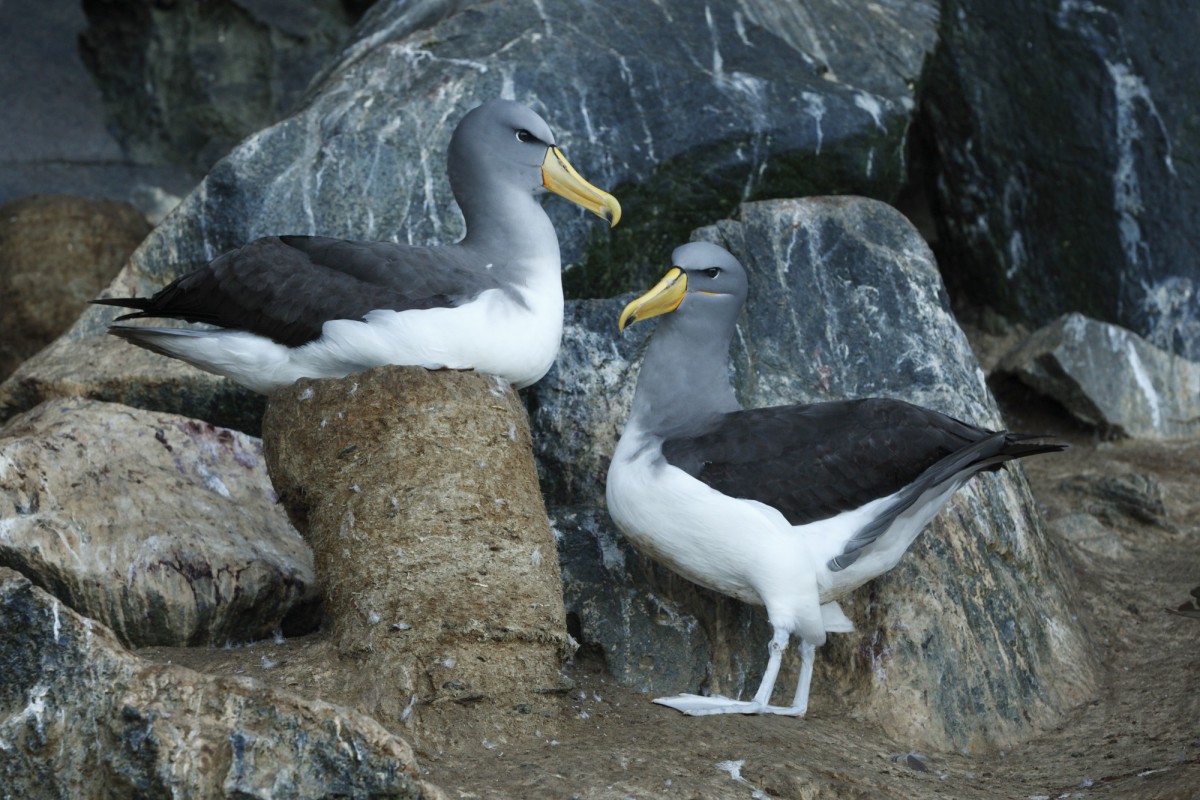
Chatham Island albatross. Image: Miguel A.Mejías
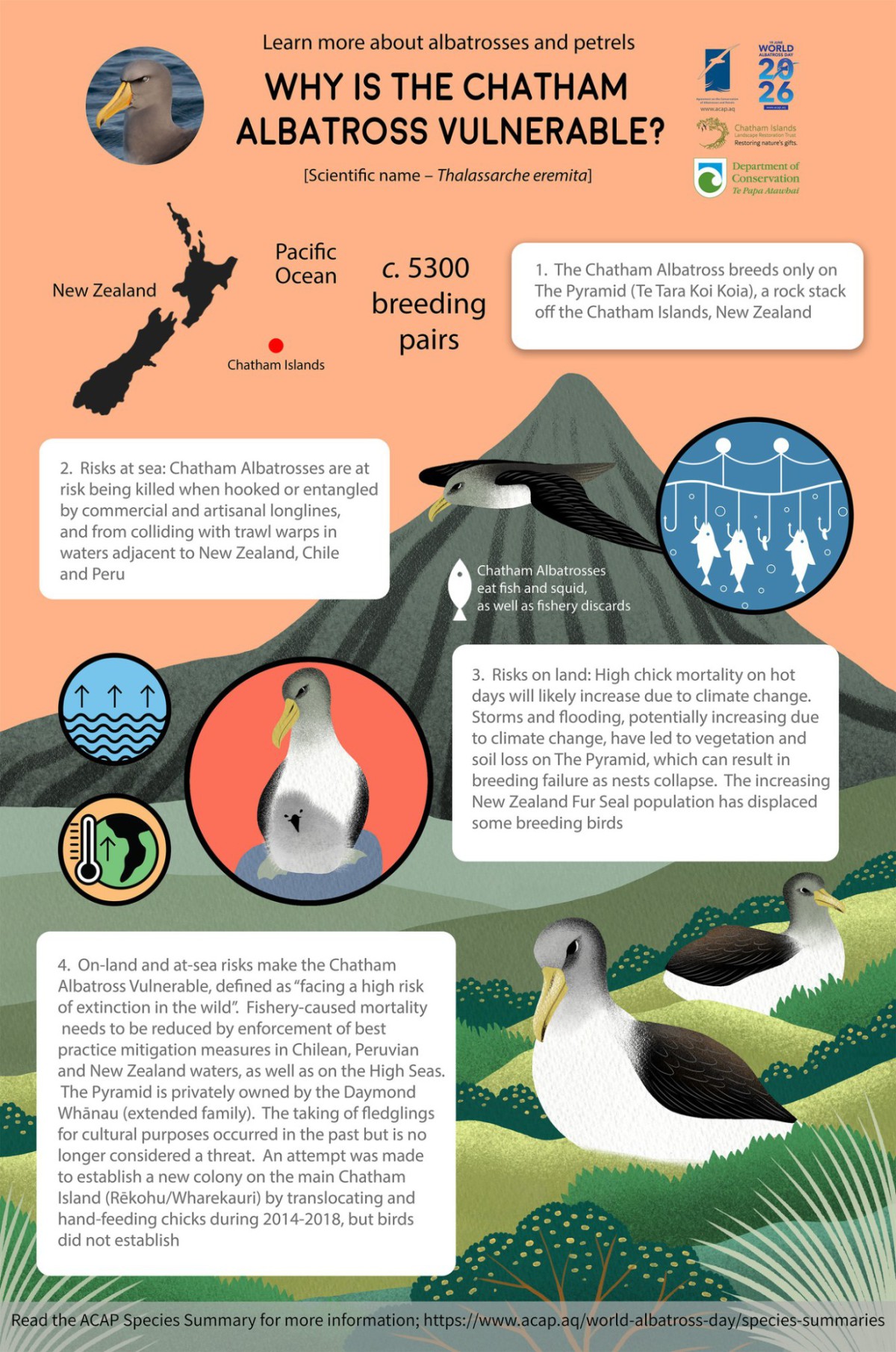
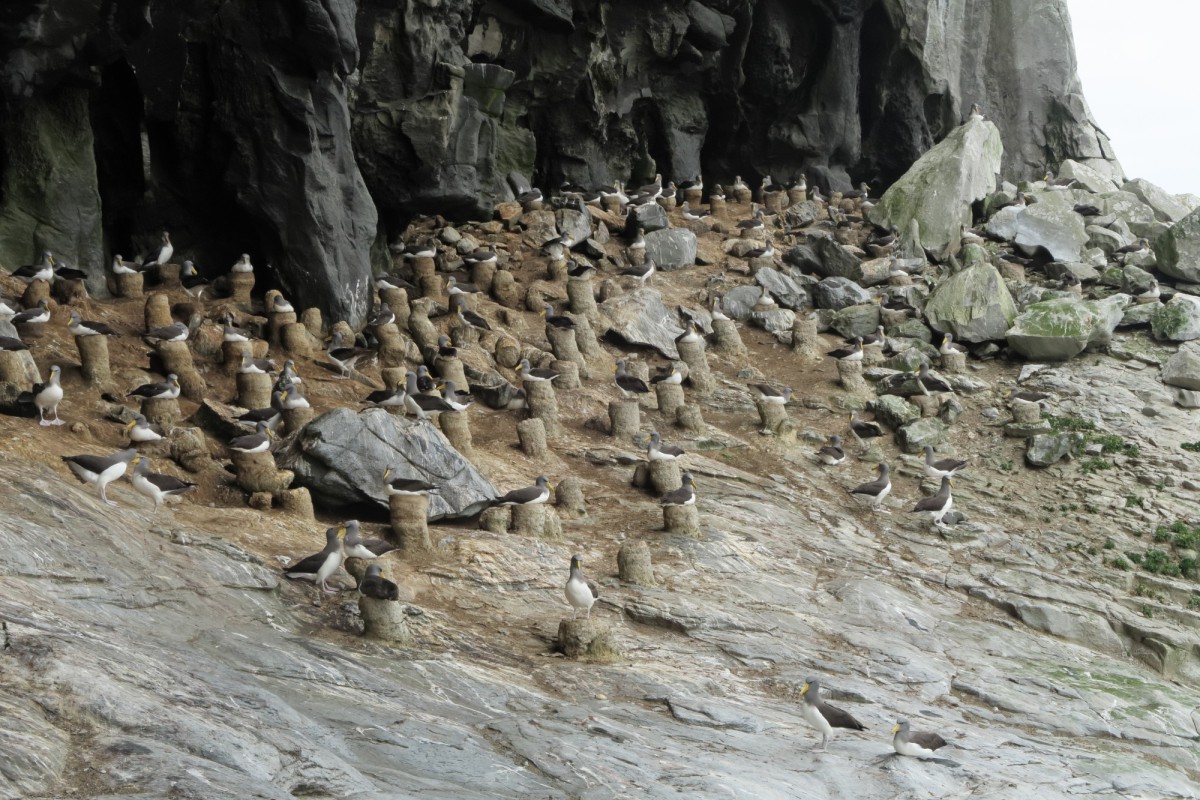
Chatham Island albatrosses (or mollymawks) breed in just one place on Earth: a volcanic rock stack known as the Pyramid, or Tcharako in Moriori and Te Tara Koi Koia in Māori. Located 8 km south of Pitt Island in the Chatham Islands archipelago, this dramatic basalt islet is 1.7 hectares in size, rises 174 metres out of the sea, and is extremely steep. It’s called ‘the Pyramid’ for a reason!
The Pyramid’s isolation and sheer sides have helped keep it free of introduced predators. Its difficult access also limits human disturbance. The site is privately owned by the Daymond whānau, and permission is required to land.
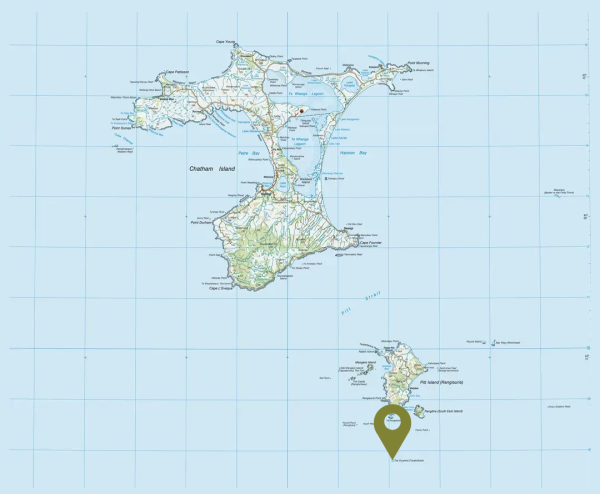
Location of the Pyramid.
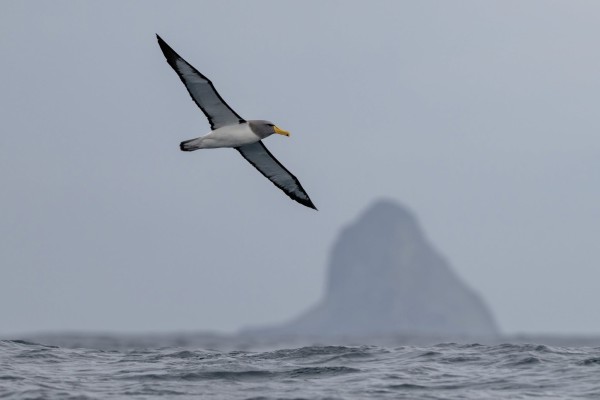
Chatham Island albatross with the Pyramid in the background. Image: S Bradley, Heritage Expeditions
Although this remote breeding site offers important protection, it’s also highly exposed to extreme weather and the impacts of a changing climate.
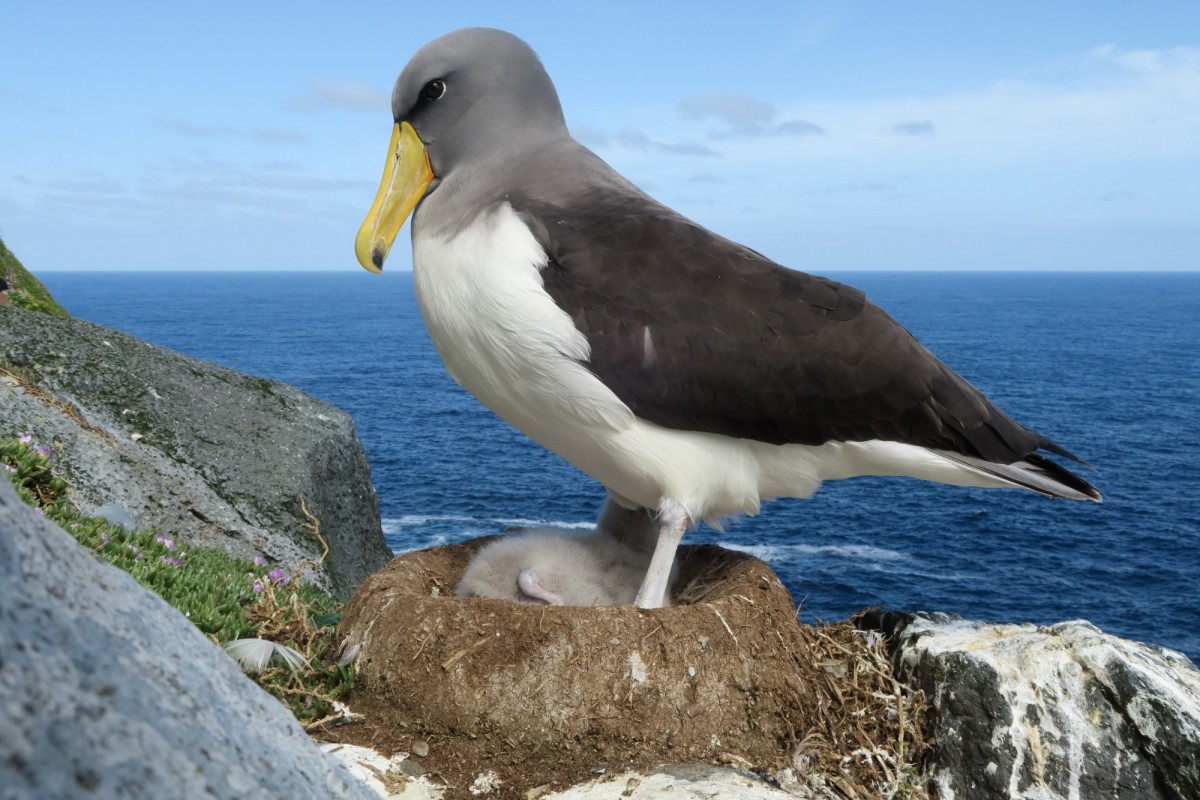
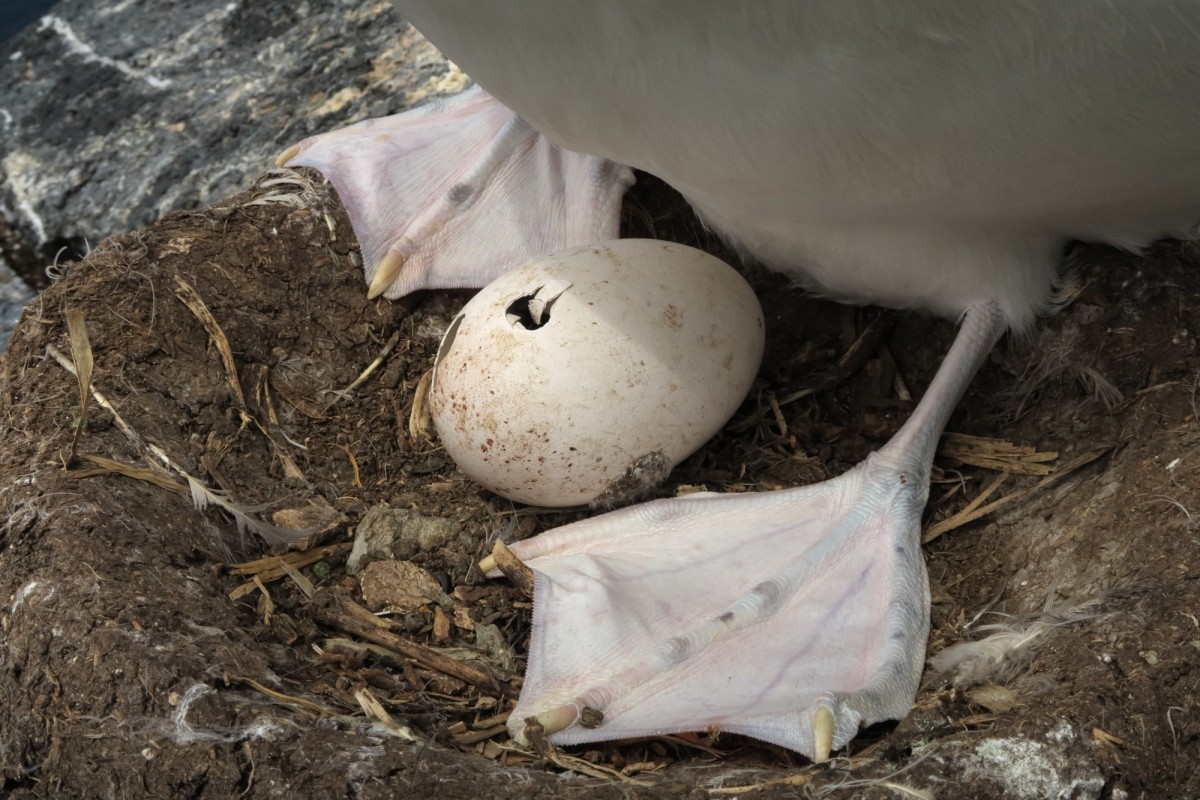
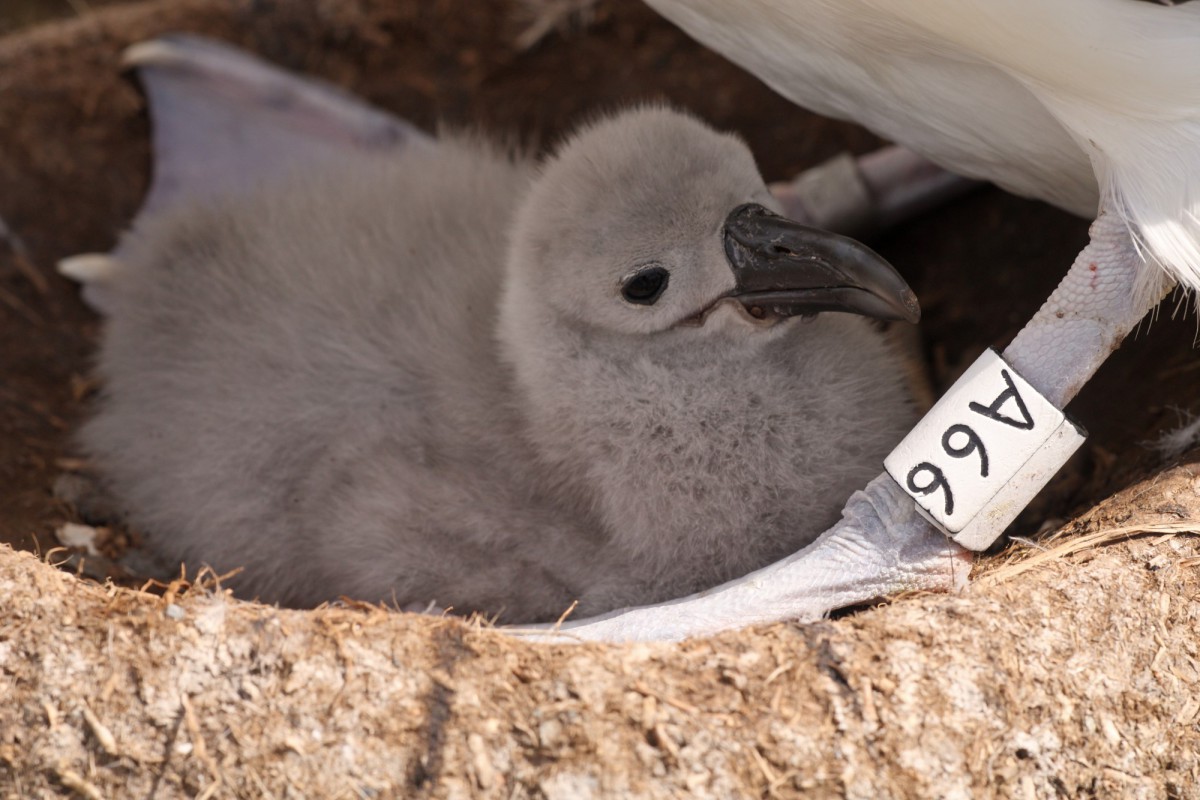
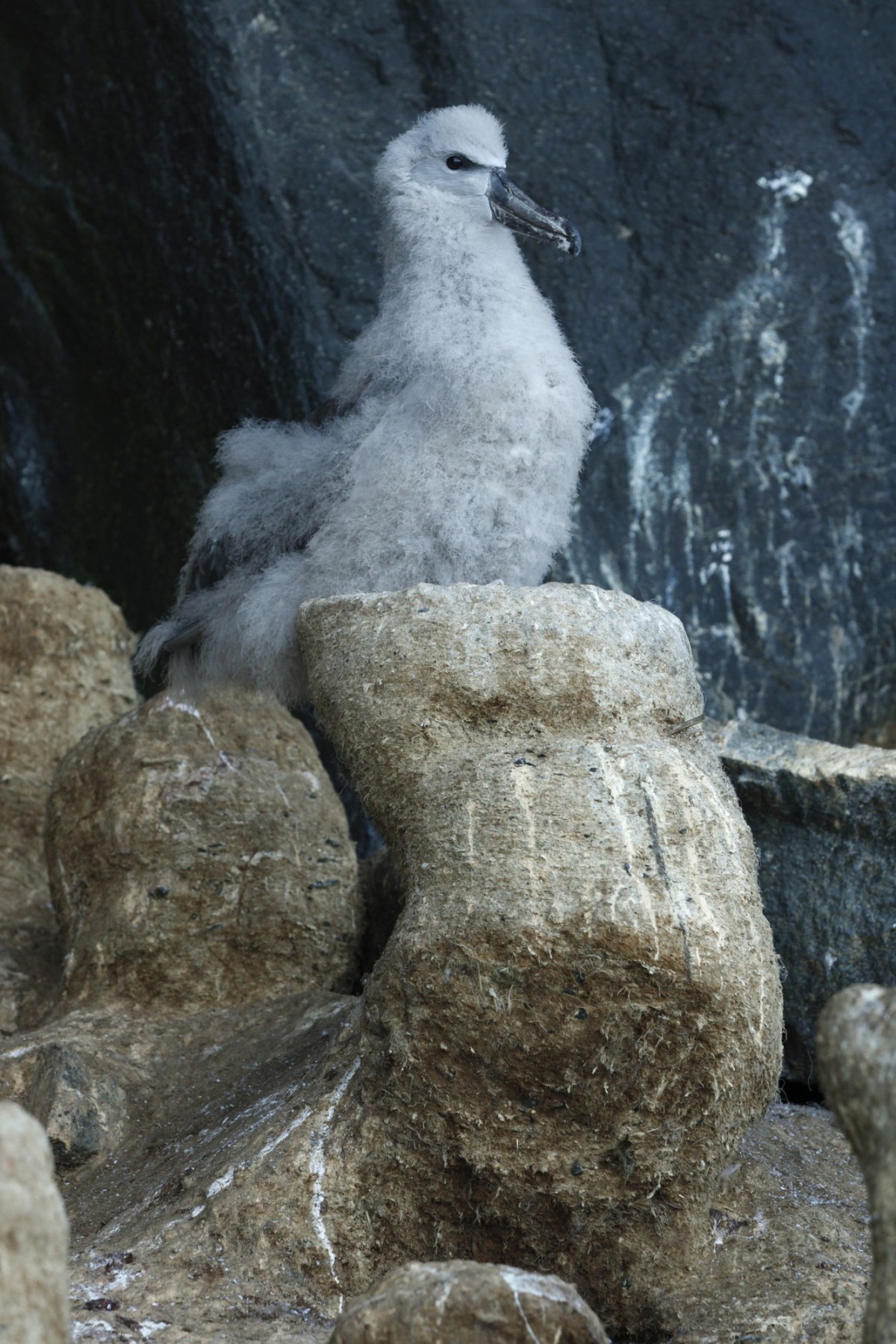
Chatham albatrosses build ‘pedestal nests’ on the ground using vegetation, soil, guano, and other materials. Severe storms can strip breeding site of these building materials, forcing birds to lay eggs directly on rock. As a result, eggs are much more likely to break.
Storms during breeding season can also impact chick and adult survival. Hot weather presents another challenge, particularly for fluffy chicks whose nests offer little shade. Temperatures higher than those they’ve evolved to cope with can lead to heat stress and dehydration, reducing their chances of survival.
Over the last few years, ornithologists working on the Pyramid have noticed an increase in severe storms and hot days, along with the impacts these have on the colony.
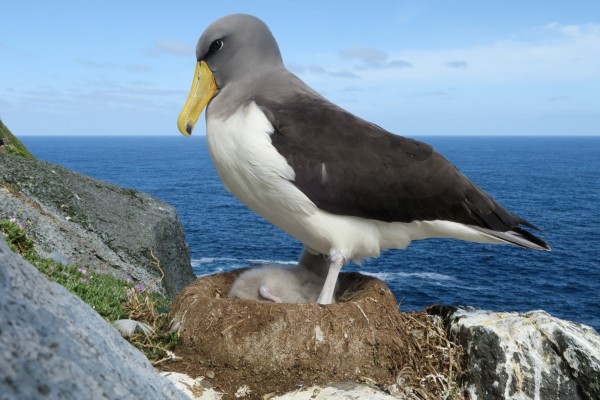
Chatham Island albatross with its chick in the nest. Image: Dave Boyle
To help safeguard the species, an attempt was made by the Chatham Island Taiko Trust to establish a second colony on Rēkohu Wharekauri at Point Gap Sanctuary, although this doesn’t appear to have been successful. Chicks were translocated from the Pyramid and placed in ‘flower pot’ nests to mimic their natural nest structures, and were hand-fed for three months before fledging. The sanctuary is protected by a predator-proof fence, with predator control carried out around this area.
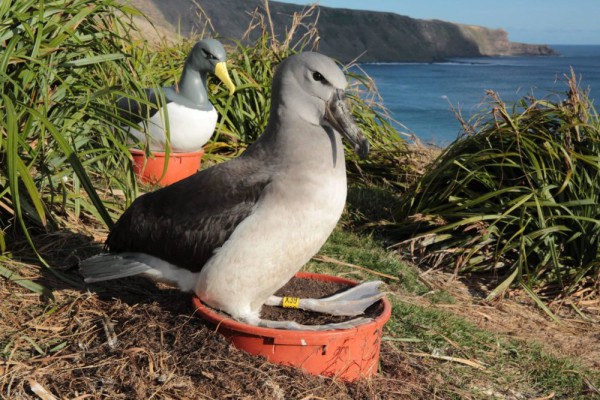
Albatross fledging at Point Gap. Image: Taiko Trust
The Chatham Islands Landscape Restoration Trust is leading efforts to eradicate introduced predators from both Rēkohu Wharekauri and Pitt Island – the two largest islands in the archipelago, and the only ones inhabited by people. These efforts will be supported by wide-spread native plantings and site protection that will allow habitat to establish or regenerate.
Safe, healthy habitat plays a key role in the survival of endangered species. Currently, a few individual birds from other albatross species breed or visit the two main islands, most notably a breeding pair of Antipodean albatrosses on Pitt Island. There are a number of sites where other seabirds, like the Chatham Island tāiko and Chatham Island petrel, are breeding, or where colonies could reestablish.
Healthy ecosystems also mitigate against the impacts of climate change, making habitat restoration an important part of restoration planning.
The long-term vision for the Chatham Islands is to see seabird ecosystems restored and thriving across the entire archipelago.
How to help
- Protect habitat by getting involved with or supporting predator control efforts, and ensuring any areas that are regenerating or being planted are fenced off.
- If you’re planting, choose natives – particularly ones appropriate for the location. Support community planting days and other planting activities.
- If you’re fishing, use barbless hooks, weighted lines, and artificial lures to avoid catching albatrosses and other seabirds as bycatch.
- Dispose of rubbish responsibly to minimise the risk of plastic ending up in the ocean, where seabirds and other sea life can mistake it for food.
- Support the Landscape Restoration Trust's kaupapa by Sponsoring a Trap, making a donation, or offering other in kind support. You can also advocate for our islands and mahi by spreading the word!