Blog and news
Species Spotlight: Deepwater Creatures of the Chatham Rise
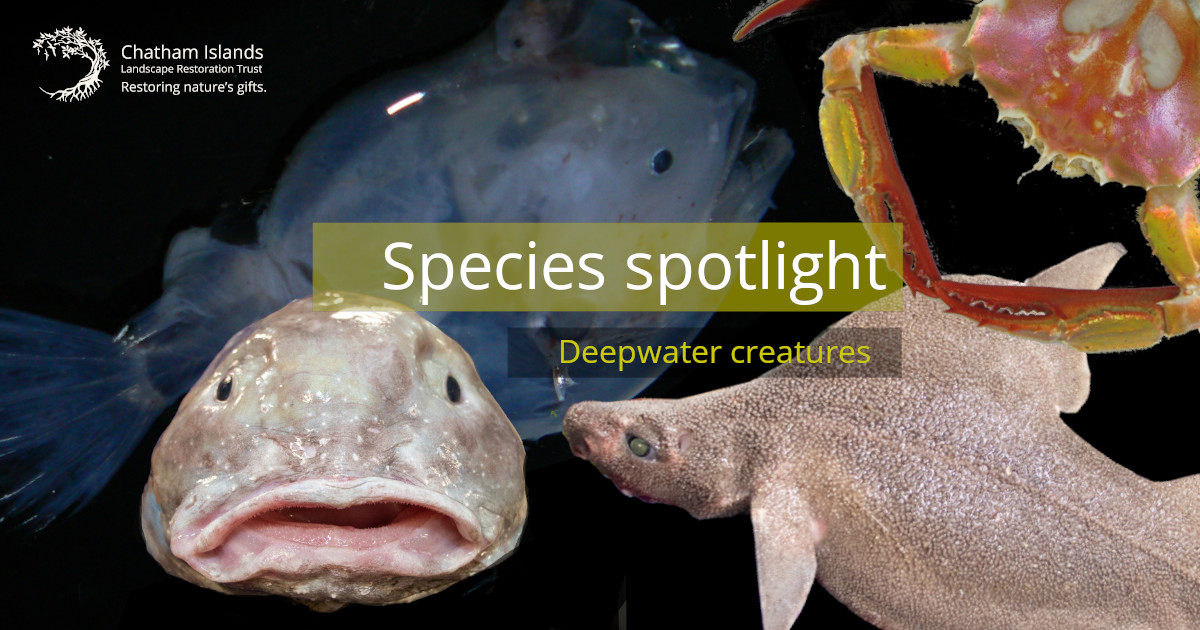
We’re shining the spotlight down into the ocean’s Twilight Zone to share four unusual deepwater creatures found on the Chatham Rise.
In the rich zone created by the clash of the Southern and Pacific Oceans, the Chatham Rise is one of Aotearoa’s most productive marine areas and supports a diverse ecosystem. With an average depth of 400 metres dropping off to 3,000 metres at some of its edges, this marine plateau stretches 1,000 km between the South Island and the Chatham Islands. NIWA (now Earth Science New Zealand) has been carrying out research in these waters for over 30 years.
Here are some of the crazy creatures found in Chatham Rise waters.
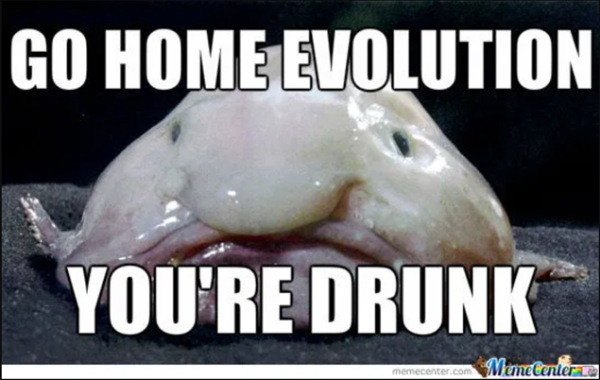
Blobfish
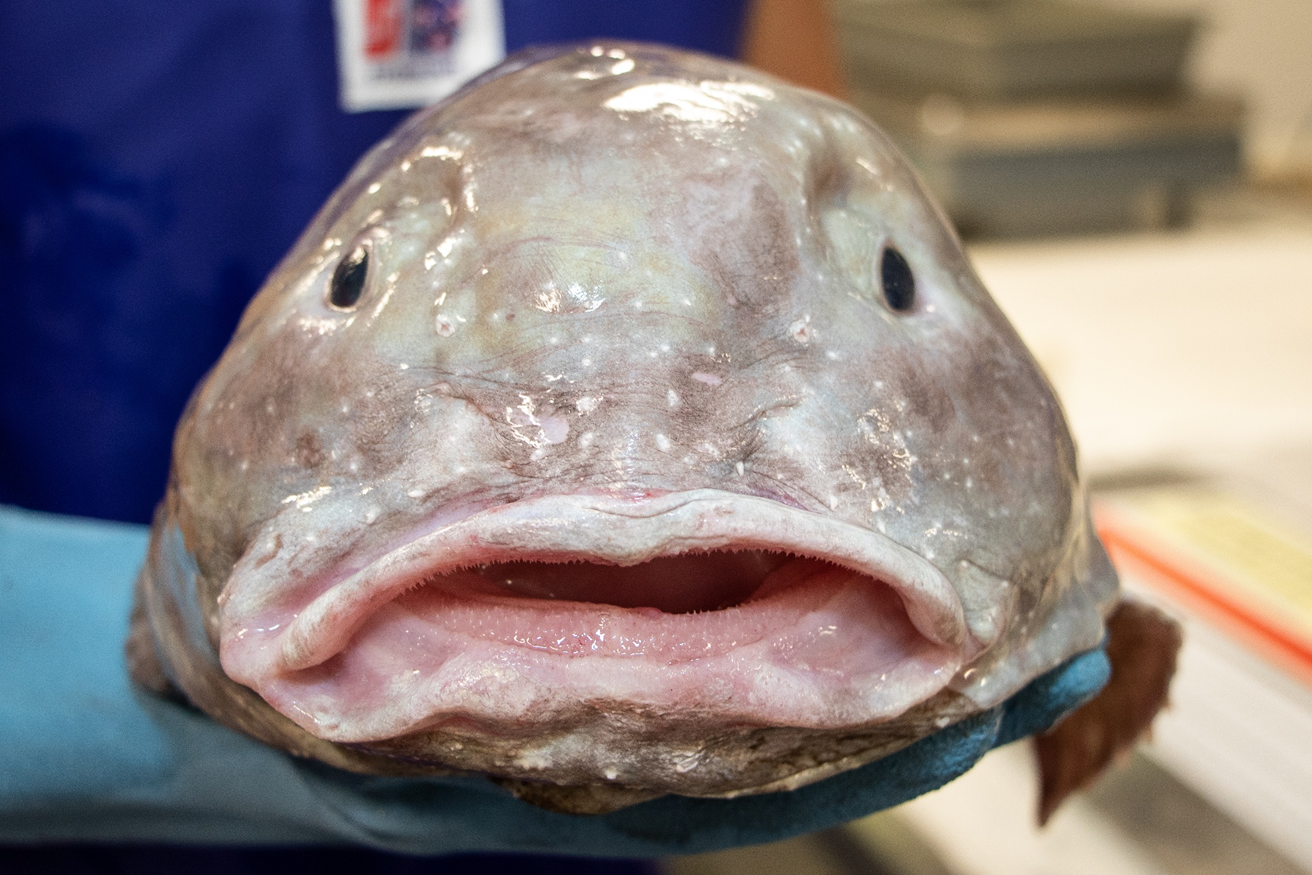
Blobfish (Psychrolutes microporos). Image taken on RV Tangaroa by Bhakti Patel, Blake Trust
This might be a familiar, lovable face. An especially pale specimen of this species made headlines and memes in 2003 after being collected on NIWA’s research vessel RV Tangaroa. In 2025 it achieved further recognition by taking out New Zealand Fish of the Year.
The blobfish gets its name from its gelatinous appearance at sea level. However, it lives on the seabed 600-1,200 metres down where the pressure is much higher and where it has a more recognisably-fishy shape.
Blobfish are mainly found in New Zealand waters and grow to about 63 cm in size. They’ve been described as “lazy,” doing as little as possible and opportunistically eating whatever passes in front of them – including octopus, hermit crabs and deepsea fish. Given the depths they live in, they don’t have a swim bladder to keep them buoyant like fish that live closer to the surface have; this air-sac organ would simply get squashed by the pressure. Instead, blobfish get their buoyancy from a high fat content, a survival strategy that supports their languid approach to life.
On a recent survey of the Chatham Rise in January 2024, eight blobfish were caught.
Prickly dogfish
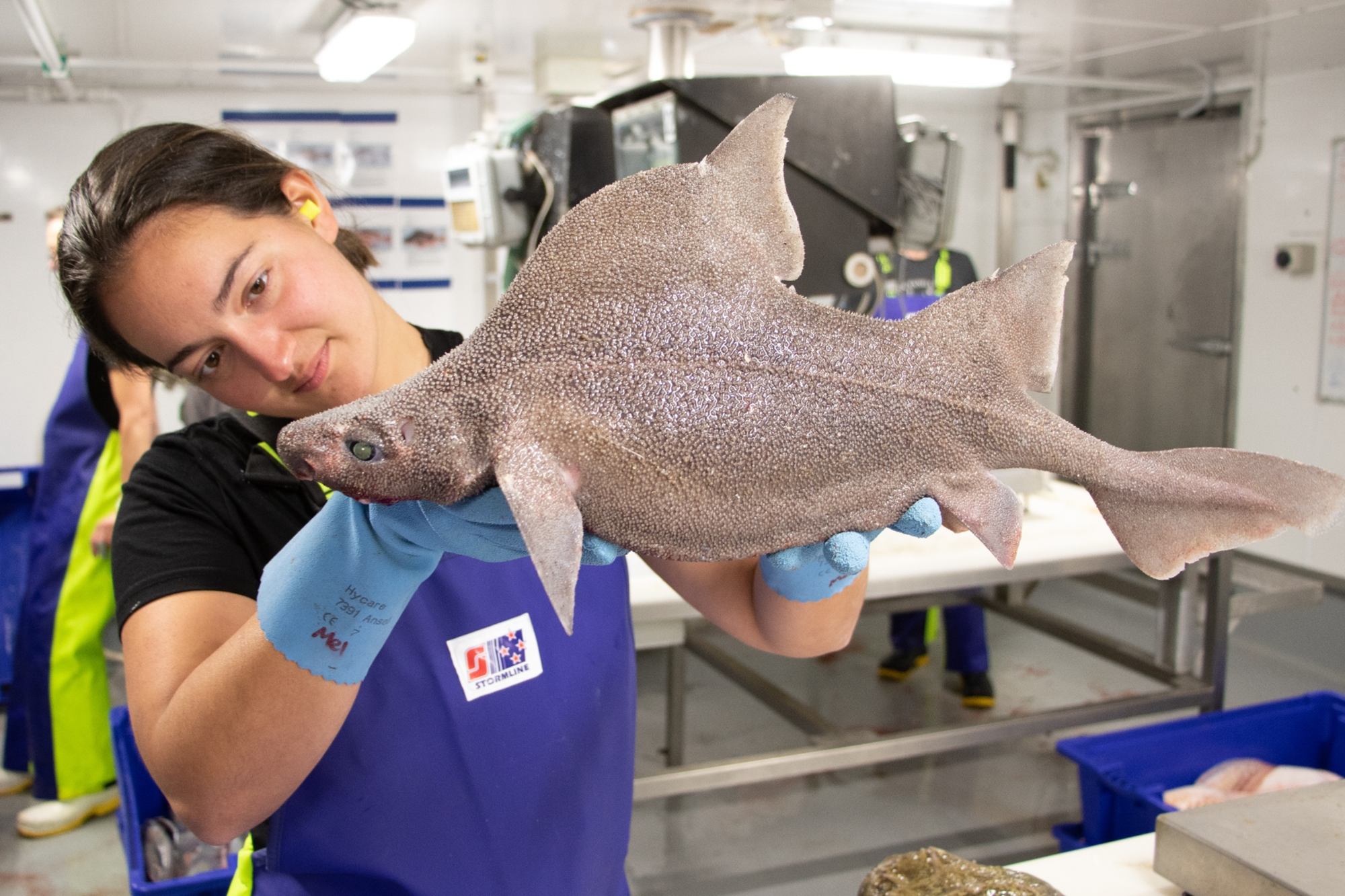
Earth Sciences NZ scientist Melanie Hayden holding a prickly dogfish (Oxynotus bruniensis). Image taken on RV Tangaroa by Bhakti Patel, Blake Trust.
If the distinctive hump-backed appearance of this small shark isn’t fascinating enough, take a closer look at its glittering, crystalline skin.
Dermal denticles are the tooth-like scales that cover sharks and rays. They act like a natural armour, as well as helping reduce drag in the water to enable more efficient swimming. The prickly dog shark has particularly…. well, prickly, three-pronged denticles.
Found in temperate waters around Australia and Aotearoa, prickly dogfish are mostly found near the seabed between 350–650 metres deep. Females give birth to litters of around seven pups, which presumably aren’t quite that spiky when they’re in the womb! From 24 cm at birth, they will grow up to 60 cm for males and 72 cm for females.
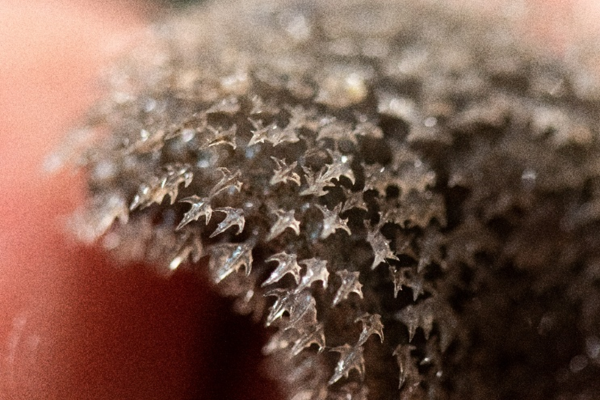
Close up of the skin of the prickly dogfish showing the tooth like denticles that give it its name. Image: Bhakti Patel, Blake Trust.
Rumour also has it this species is a fussy eater with very specific taste buds. Earth Sciences NZ scientist Brit Finucci tells us they only seem to eat the egg cases of ghost sharks.
Seven specimens of prickly dogfish were caught on the Chatham Rise on the January 2024 survey.
Moller's swimming crab
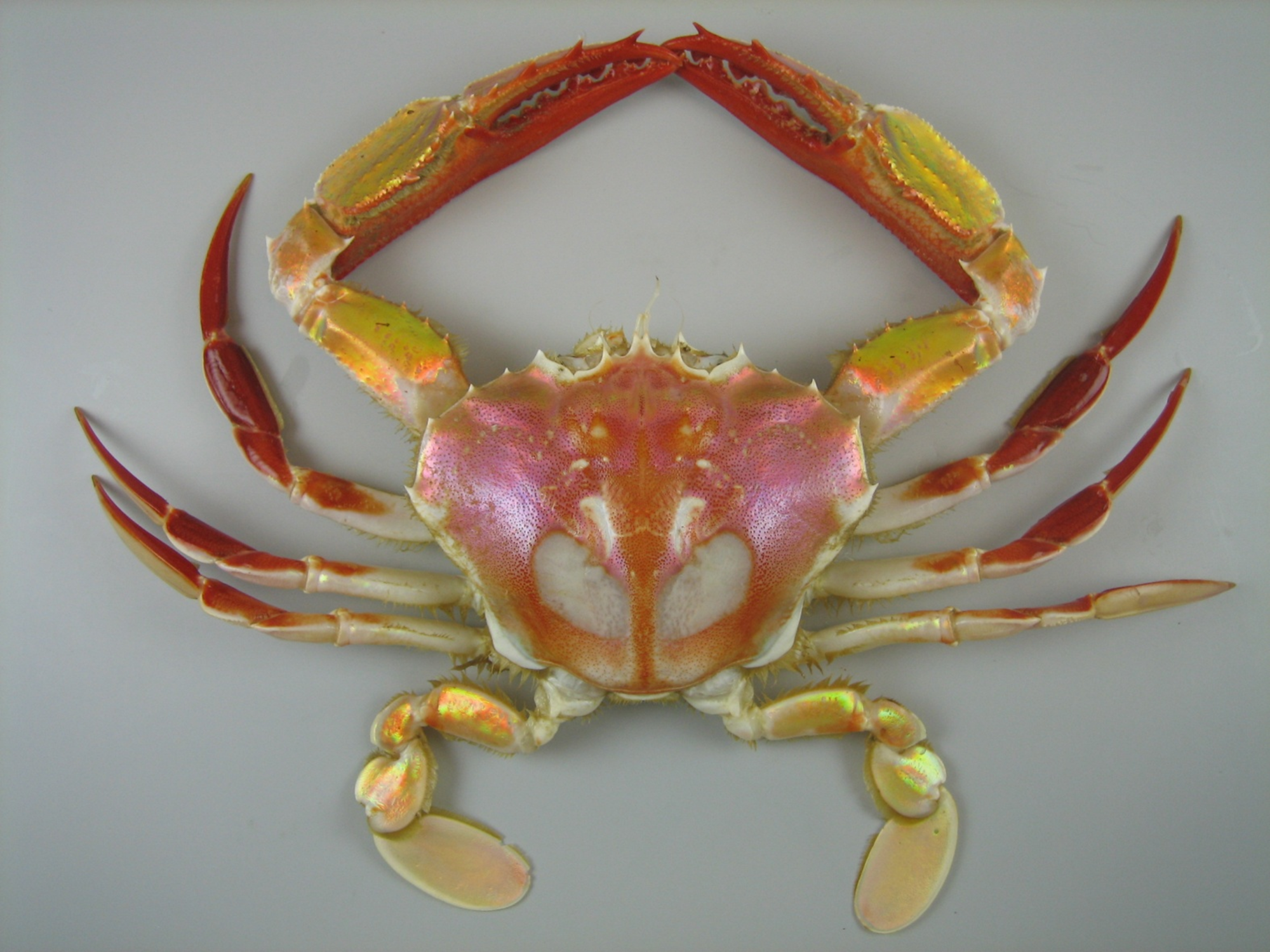
Moller's swimming crab (Ovalipes molleri). Image: Earth Sciences NZ
This crab is iridescent.
That’s how Moller’s swimming crab (Ovalipes molleri) is thought to communicate. While many species, like the common paddle crab found in shallow waters around Aotearoa, seek to attract a mate by the sound made from rubbing their legs against a rasp on their claw, we think these swimming crabs use their iridescent patches to signal their amorous intentions to prospective partners.
Generally found at a depth of 70-600 metres, this species is found around Eastern Australia and northern Aotearoa south to the Chatham Rise. Their shimmering shell can grow up to 12 cm wide, though females tend to be smaller.
Two of these iridescent beauties were caught on the 2024 Chatham Rise survey.
Ghostly seadevil
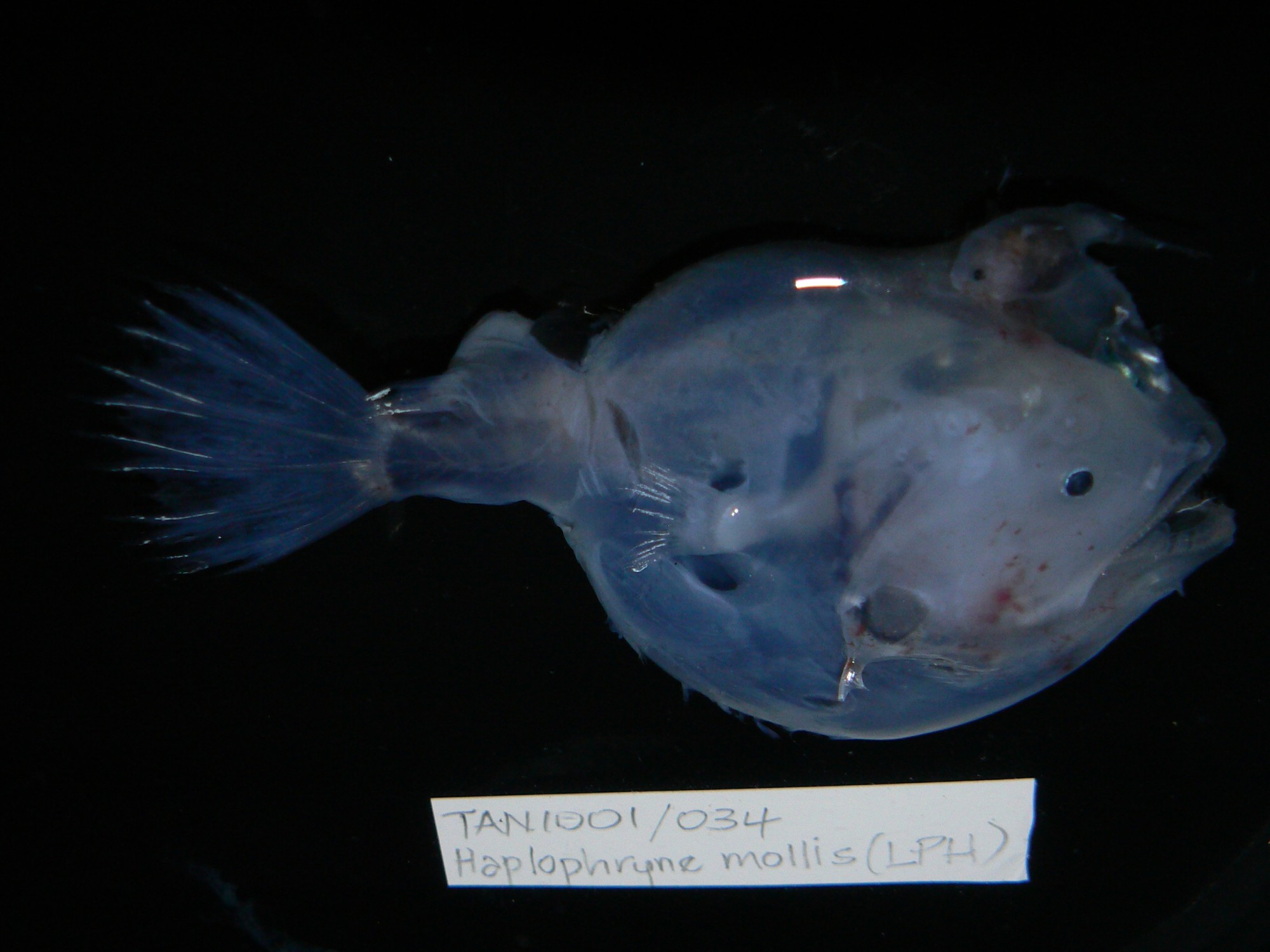
Ghostly seadevil (Haplophryne mollis) caught on the Chatham Rise in January 2010. Image: Darren Stevens, Earth Sciences NZ
Pictured here – not one but two fish. In the top right you can see the tiny male of this species, so dependent on this female that he’s permanently fused to her body.
The ghostly seadevil (Haplophryne mollis, also known as the phantom anglerfish and soft left-vent angler) is a type of angler fish. The name comes from the esca, or light lure, that grows as a modified fin on the front of its head. Living in the dark depths of 700-1500 metres, the light is cunningly angled towards their mouth to attract prey directly to them.
Females are famously larger than the males, growing between 8-16 cm in length. Males tend to reach less than 2 cm and live independently until they find a female – at which point they latch onto the females body with their teeth, and remain there. Eventually their body tissues combine, with the male now depending on his host for all nutrients. Females often have more than one male attached. One female was recorded with six!
It’s easy to pass judgement on this relationship, but remove the human social bias and this is a clever survival strategy. In the deep dark depths it can be hard to find a mate when you need one; this way, once they meet there’s always a guarantee of a partner for the perpetuation of the species. In saying this, only around 30% of mature female seadevils encountered have a male parasite.
This couple was snapped on the Chatham Rise in January 2010.
Other references
A huge thanks to Earth Sciences New Zealand, especially Dr Richard O’Driscoll, for sharing their research with us for this blog.
A guide to common deep sea Invertebrates in New Zealand waters
More on the prickly dogfish.
More on the ghostly seadevil.