Blog and news
Species Spotlight: Black robin
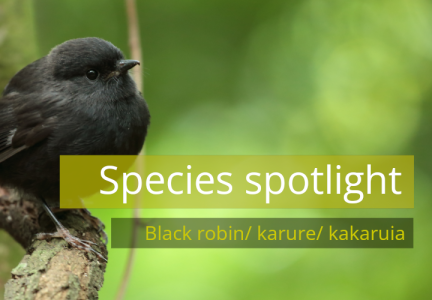
Drumroll, please! We’re spotlighting the black robin (karure, or kakaruia) because this small round bird has a big story to tell. The efforts that spared this species from extinction put New Zealand on the international conservation map – but the karure's tale of recovery is not over yet.
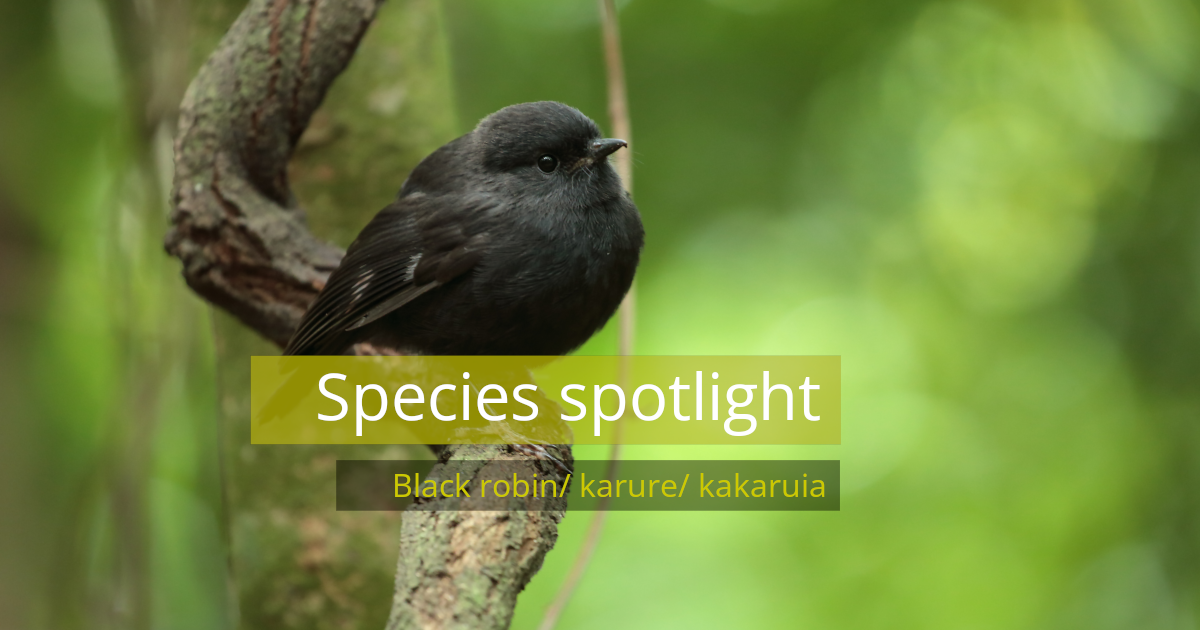
They're the best amongst robins.
There are three kinds of robins in Aotearoa: the North and South Island robins (Petroica longipes and australis respectively), and the black robin (Petroica traversi), which is endemic to the Chatham Islands. Just 22-25 grams and 10-15cm long, it’s the smallest.
Despite the name “robin,” Aotearoa’s birds are not related to the famous red breasted robin in the United Kingdom – or the American robin (which isn’t related to the British one either). Instead, the New Zealand robins are part of the Australasian robin family which contains a total of 51 species. The tiny New Zealand tomtit is also part of this family and has five subspecies, including one endemic to the Chathams.
(Side note – the New Zealand tomtit is also not related to the European or American tits, which are also called ‘titmice’ despite being birds.)
In summary: the name “robin” gets thrown around a lot, but the best of these birds is objectively the black robin – or karure in Moriori and kakaruia in Māori.
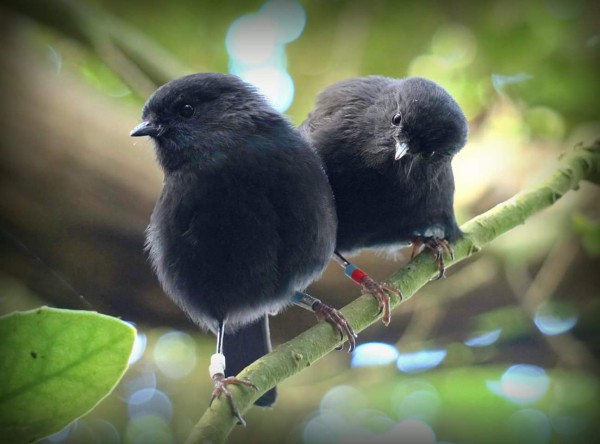
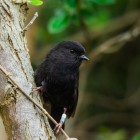
Two black robins. Image: iNaturalist Catherine Beard
They define the term “brought back from the brink.”
Karure were brought back from the brink of extinction, with just 5 individual birds on the whole planet in the 1980s. And just one of them – Old Blue – was a female.
You could also say they were brought back from a literal brink. Their last stronghold was a tiny island, Little Mangere. Although just 17ha in size, this volcano massif has steep, sheer cliffs and rises to 214m.
Efforts from the local community and the former New Zealand Wildlife Service saved the species. A highly-managed breeding programme and a lot of on-the-ground support boosted numbers – including use a method called “cross-fostering.” Clutches of eggs laid by Old Blue were given to pairs of their cuzzies, Chatham Islands tomtits, to hatch and raise, encouraging the black robin pair to lay more eggs. This was such a success it’s used internationally as a case model for management of endangered birds.
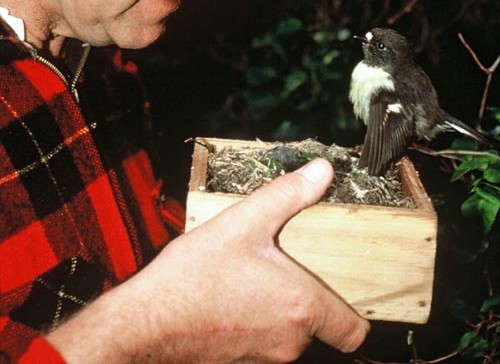
Chatham Island tomtit fostering black robin eggs. Image: Department of Conservation
They were once found on five islands in the Chathams.
In order of size, the islands Rēkohu Wharekauri, Pitt, Hokorereoro Rangatira, Maung’Re Mangere, and Little Mangere were all once forested and home to karure.
Black robins have specific habitat needs. They’re small birds and their favourite foods is bugs, so they need cover to protect them and access to an ample supply of invertebrates.
Good karure habitat is low-lying coastal forest with a dense canopy and shaded understory, with trees like hakapiri, endemic karamu, and Chatham Island ribbonwood. They often nest in cavities, branch forks, or in dense Muehlenbeckia vines, usually within 2 metres of the ground. The leaf litter of a healthy forest floor is full of tasty snacks like wētā, grubs, flies, moths, and spiders.
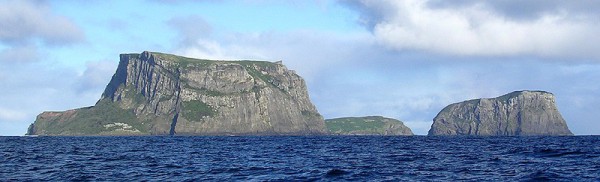
Mangere Island (left) and Little Mangere (right). Image: Dave Houston
Introduced pests are a big problem.
Introduced predators are a big concern for these little birds. Karure evolved to stick to the protective canopy cover of forests, but – as we know – mammalian predators like forests too. Little birds that forage on the ground and build their nests low can be easy targets.
The introduction of kiore seems to have been the start of the birds’ demise on Rēkohu Wharekauri, and the introduction of cats to Pitt Island may have led to their disappearance there.
Mice are also a problem because they compete for food. Failed attempts to transfer black robins into a fenced covenant on Pitt Island in the early 2000s was due in part to food competition.
This is a key reason why black robins are currently only found on the two nature reserves, Maung’Re/Mangere and Hokorereoro/Rangatira. Both islands are pest-free and managed with strict biosecurity, and the forest is still regenerating but good enough to support several rare species.
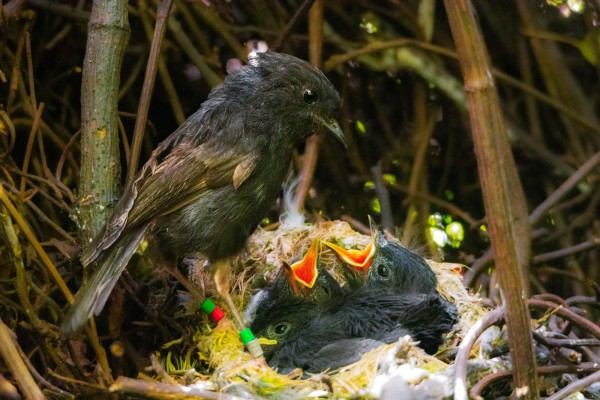
Black robin feeding chicks on Mangere. Image: Enzo M. R. Reyes
Black robins are facing a housing crisis, too.
The karure population is growing – which is a real success! But the species has hit another big challenge.
Black robins can be very territorial, defending their food sources and safe roosting and nesting places. Right now, all the good territories are taken. Young birds can try to muscle in on someone else’s territory, or get pushed right to the edge of the forest, where they’re vulnerable to weather and don’t have a good food supply. Every year, birds that could potentially breed are lost.
Currently, 100% of karure are found on two small islands. This is a huge risk. It would be very easy for a natural disaster – like disease or an extreme weather event – to take out half or even all of the species.
Black robins need more healthy, safe habitat with a plentiful food supply. That’s where long-term restoration projects can make a huge difference.
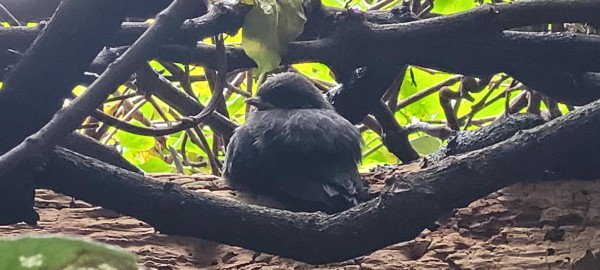
A black robin fledgling from the 2025/6 season, named Chazza by local school children.
Support habitat protection in the Chatham Islands
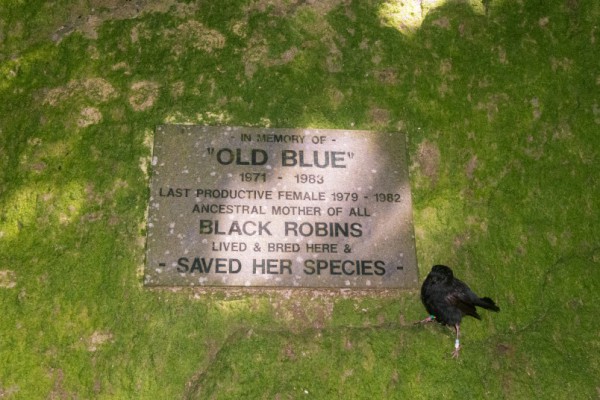
A black robin on Mangere sitting next to a plaque for Old Blue. Image: Enzo M. R. Reyes
References and further reading
If you'd like to read more about black robins, here are a few resources to get you started:
"More habitat needed for black robin" Department of Conservation media release
Hope in Action (Forest and Bird)
Extinction vulnerability in two small, chronically inbred populations of Chatham Island black robin