Blog and news
A Restoration Strategy for the Chatham Islands
An island-wide Restoration Plan will provide the Chatham Islands with a current understanding of the state of the environment, and inform more effective planning for land use and environmental projects.
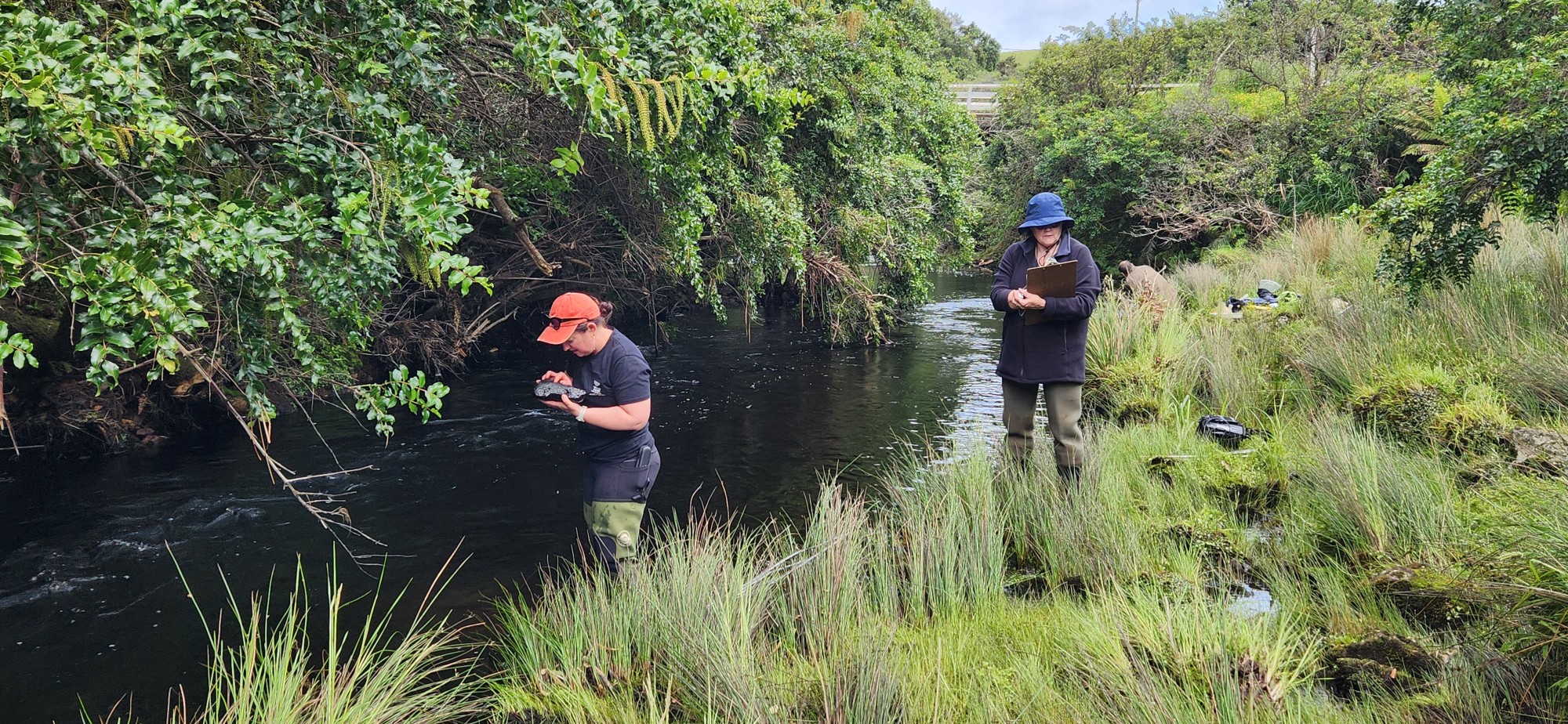
Freshwater research underway for the Restoration Strategy.
What is the Chatham Islands Restoration Strategy?
The Restoration Strategy is a document, based on up-to-date scientific analysis, that will create a current picture of the different ecosystems on our two main islands and their current state. Experienced ecologists are carrying out field work right now to ensure it's built on accurate knowledge.
When it's complete, the Strategy will be a tool for different groups and our community to use for planning and projects relating to the enviroment. It will help be more effective, efficient, and maximise the limited resources on the Chatham Islands.
While a lot of reserach about Chathams ecosystems has been done in the past by different groups, bringing that information together has often been a challenge. Some of that reserach was also done years (even decades) ago; a lot has changed in that time. As a locally-led project, this Restoration Strategy will ensure the data gathered will be accessible for islanders.
This kind of document is something many regions of Aotearoa New Zealand already have and actively use. The Strategy will fill a significant knowledge gap for the Chathams, serving as a framework for:
- prioritising and planning conservation and environmental work on the Chatham Islands
- informing planning and projects for the future of the islands – including infrastructure projects, conservation efforts, and social and cultural activities
- helping landowners with decision-making
- supporting groups or individuals putting together funding applications.
We do want to highlight that a lot of the research we’ve received funding for is focusing on Rēkohu/Wharekauri, although the ecosystem mapping and some field work is also taking place for Pitt Island. In the future, we would like the funding to support further research on Pitt.
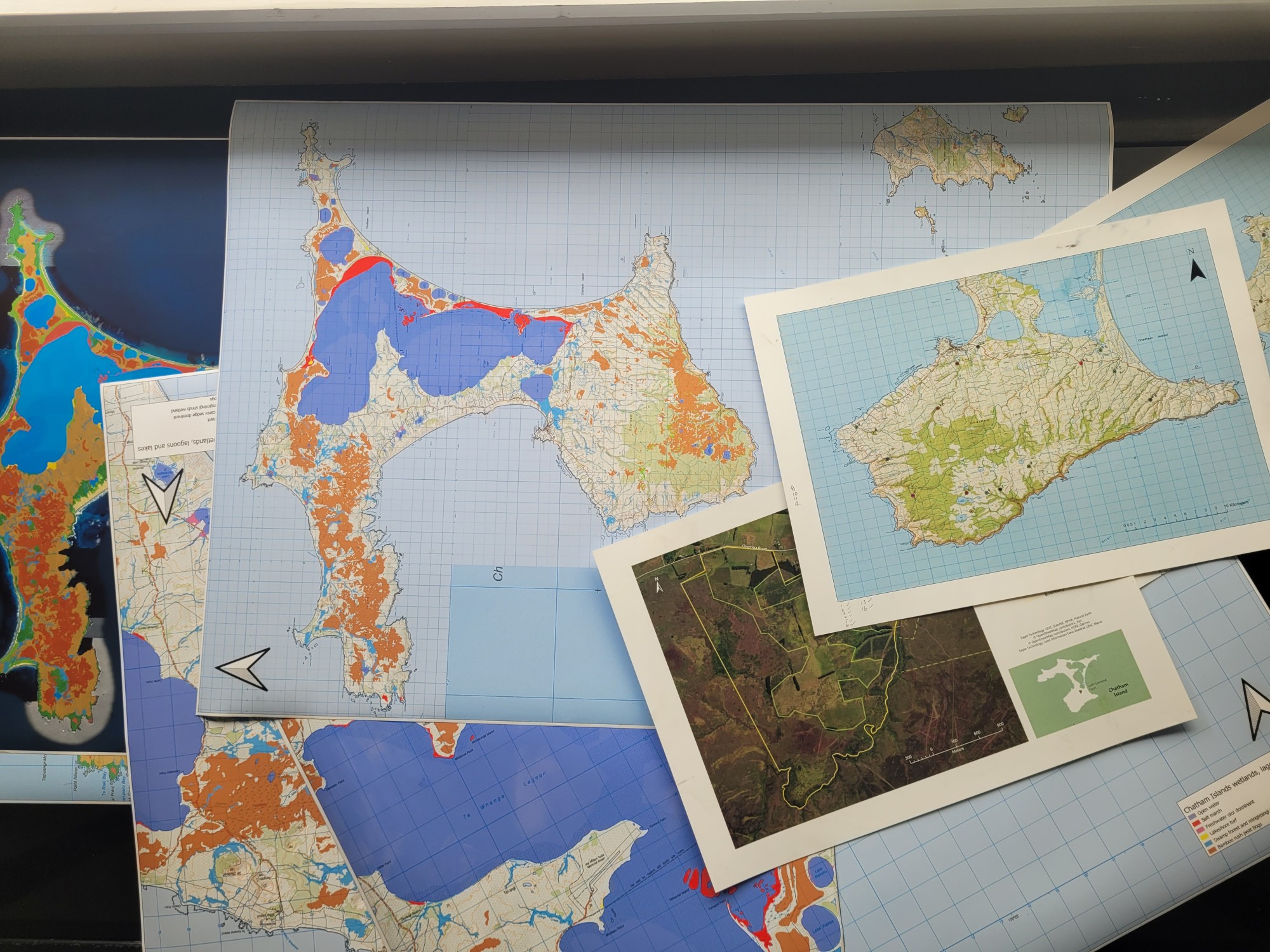
Draft ecosystem maps created for the Restoration Strategy.
How is it funded?
Our Trust applied for a grant to develop this Strategy in 2024. The Chatham Islands Enterprise Trust, Hokotehi Moriori Trust, Ngati Mutunga o Wharekauri Iwi Trust, and the Department of Conservation all submitted letters of support for the application, demonstrating the wide value this document can offer our community.
The Lottery Environment and Heritage fund kindly awarded us partial funding through a $120k grant towards this research. The work that hasn’t been funded is very generously being carried out with scientists’ volunteered time.
Areas of environmental research
The Strategy has six key research components:
- Overarching ecosystem map and prioritisation framework to better understand and prioritise conservation work on the island
- Terrestrial ecosystem research to ground truth the mapping
- Coastal environment research to add more details to the ecosystem map and understand changes and threats
- Chatham Island bird and fauna assessment to strengthen the ecosystem map and identify key threats
- Freshwater environment research to understand their current states, including health, biodiversity and pest risks
- Wetland carbon research, identifying the carbon storing potential of peatlands on the islands.
Bringing this data together will build a science-based understanding of the current state of ecosystems and species, and identify the biggest threats. This will highlight where changes to management approaches could be made to have the biggest impact, and help prioritise which ecosystems and areas need protection.
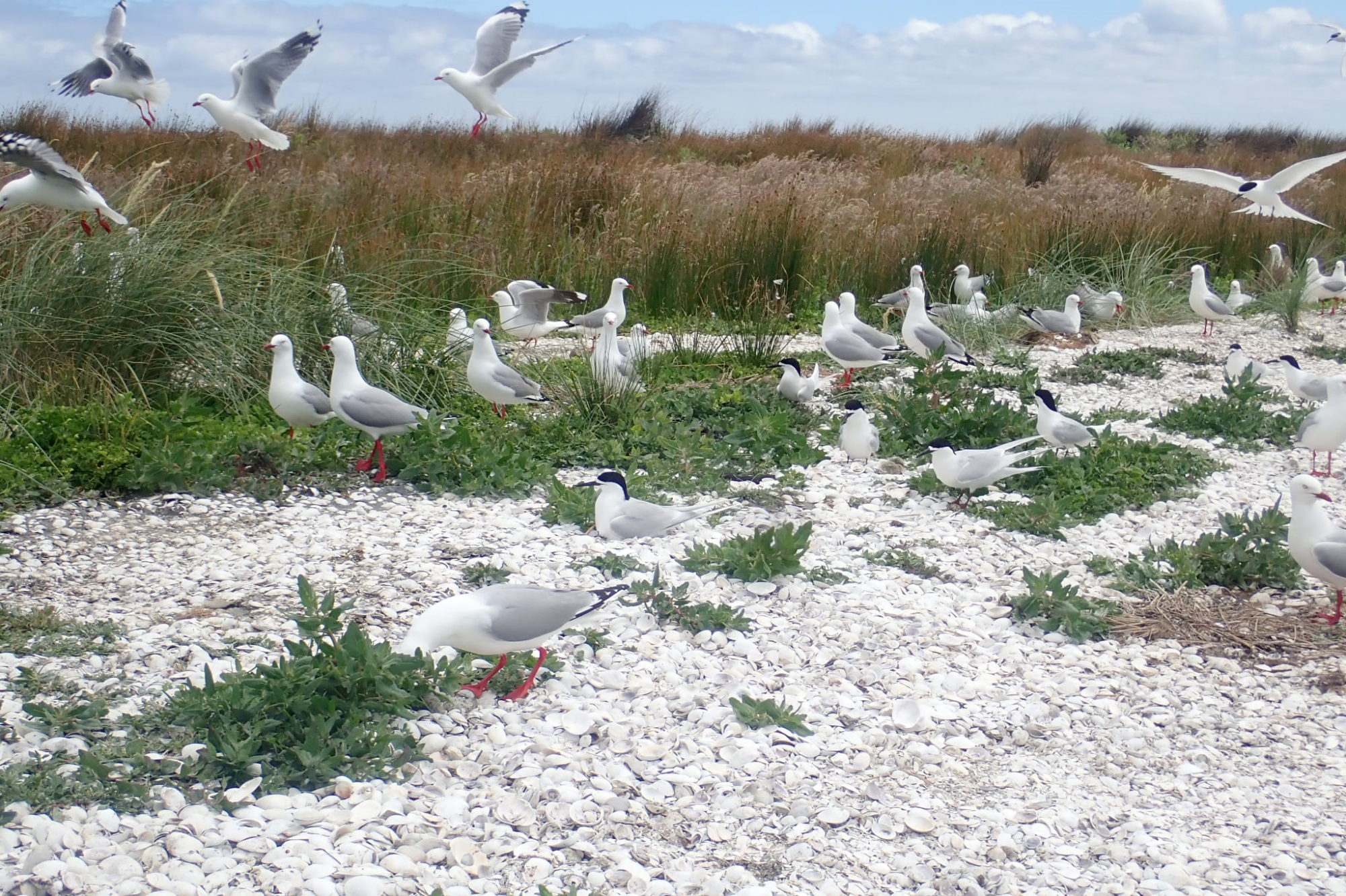
Gulls and black fronted terns on a shelly cay (a small island) in Te Whanga lagoon. Image: Peter de Lange
What’s happening on the ground?
We’ve engaged skilled ecologists who have experience with the Chatham Islands to carry out the research; many of them are familiar faces in our community. They’ll be out and about taking samples and gathering the data they need, and then analysing it. Hamish Chisholm and Milly Farquar are helping coordinate the field work.
As of early January 2025, a desktop mapping exercise has been completed, some freshwater research has been undertaken, and terrestrial ground-truthing is underway. Field work needs to happen during the summer months, and we’re hoping this will be completed by the end of March 2026. After that, the research will be pulled together into a report.
The funding we received is enough to cover the contractors’ flights, accommodation, food, and some contractor hours. The majority of these ecologists’ time is being volunteered – which is extremely generous and shows their passion for the islands.
Read an update on freshwater invetebrate research.
Who can use the Strategy?
The Restoration Strategy will be publicly available; anyone can use it – and we encourage you to!
Island governance groups, locals planning or seeking funding for initiatives, landowners, off-island groups working with the Chathams, local and central government – it’s there for everyone. Our Trust will also be able to provide some help with using it.
We hope to have the final report around mid-2026. It will be shared on our website, we’ll put a notice out to let people know it’s ready, and we’ll provide support about how to use it.
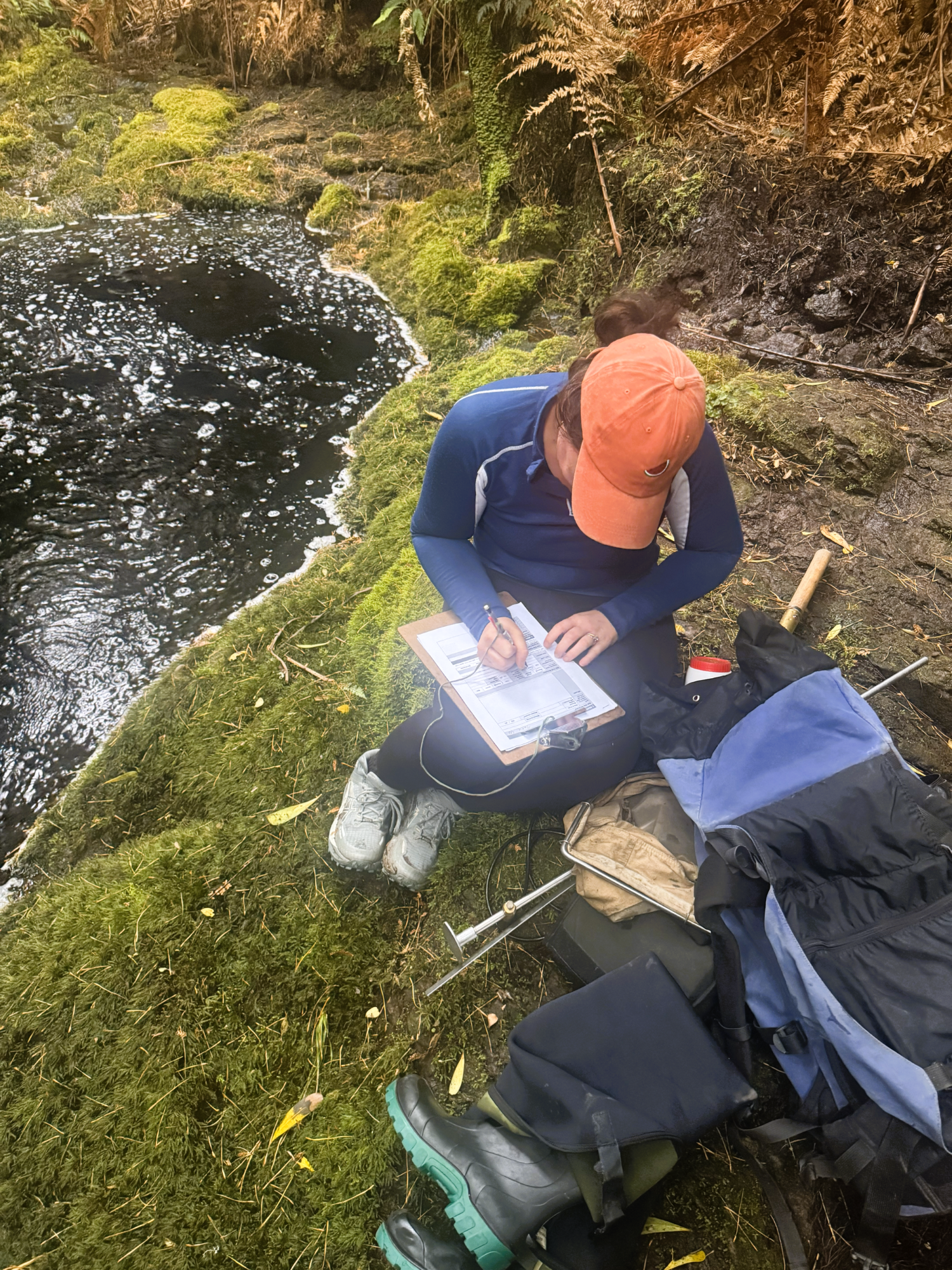
Milly Farquar taking notes on freshwater samples for the Restoration Strategy,