Blog and news
Invertebrates in Chatham Islands streams
Freshwater scientists visited Rēkohu/Wharekauri in November to take samples from streams and rivers to understand what's living there, helping to build our understanding of how different ecosystem food webs work on our islands. Professor Russell Death gives us a quick update about this research.
Very little is known about Chatham Island freshwater ecology
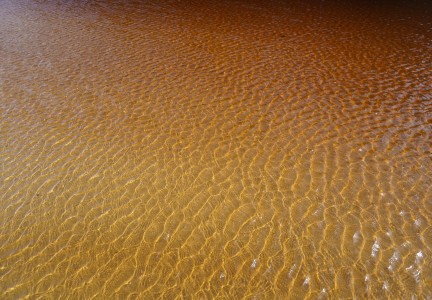
The rivers and streams on Chatham Island are unique in New Zealand. They have acidic water darkly stained from their passage through extensive peatland. Furthermore, there are many invertebrate species present only found on the Chatham Islands, while other groups of invertebrates, such as mayflies and stoneflies, are not found at all.
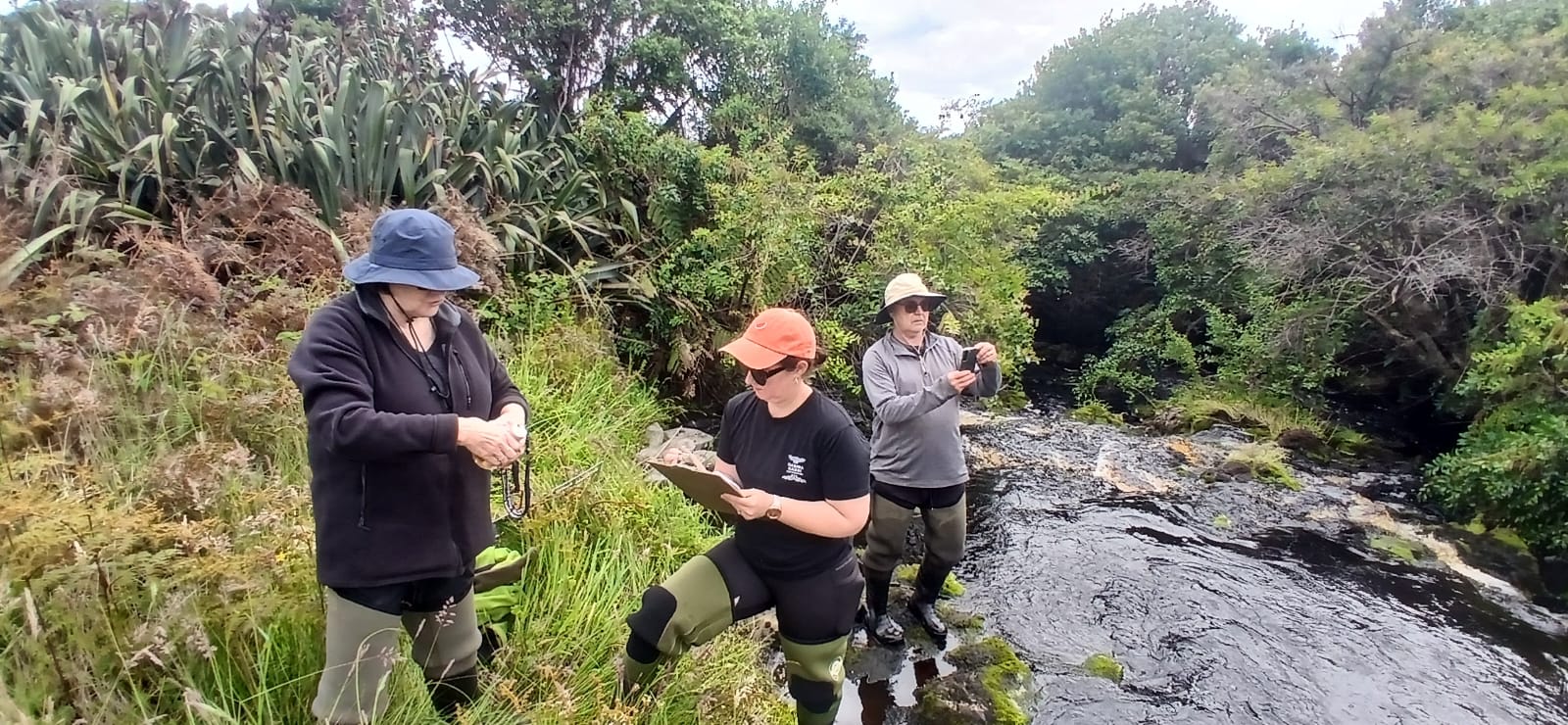
Fiona, Milly and Russell sampling a stream for macroinvertebrates.
There has been one previous survey of the stream invertebrate fauna in 2007, but the focus was assessing the scope for using the stream invertebrate fauna to measure water quality (as done elsewhere in New Zealand). Many of the collected invertebrates were only identified to Order or Family (using the biological classification heirachy; this is two to three steps away from identifying species). This study concluded that bioassessment methods used on the mainland could not be applied for assessing ecological health on the Chathams. This means a different approach is needed.
Currently, nothing is known of the ecology of these blackwater acid streams, and very little is known of the ecology of any of the endemic invertebrate freshwater fauna. Nothing is known of the conservation status or potential threats to any of the endemic species.
Research will help understand how to best manage water quality and biodiversity
In November 2025, Milly Farquhar, with assistance from myself, Hamish Chishlom, and Fiona Death, surveyed invertebrates in 28 streams across main Chatham in different habitat types including draining native forest, fernland and pasture.
Initial observations suggest the diversity and abundance of invertebrate communities is determined by the acidity and darkness of the water, perhaps in turn impacting instream productivity (for example, food abundance). For example, the Isopod genera Austridotea (only ever previously having been recorded on Pitt Island, Stewart Island, Campbell Island and the Catlins) was super abundant in the clear, less acidic streams irrespective of the land use, but absent from the dark acidic water in similar streams.
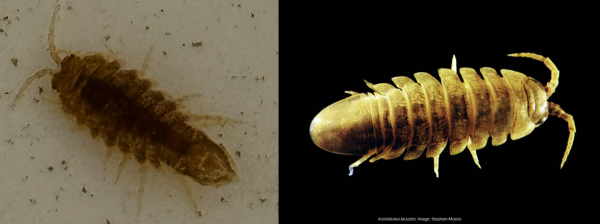
The freshwater Isopod Austridotea. Left image from the field reserach credit Milly Farquar; right image credit Stephen Moore
The team is now processing the samples and analysing the distribution of what is in them. This will provide information about how best to manage the water quality and biodiversity of these globally unique habitats.
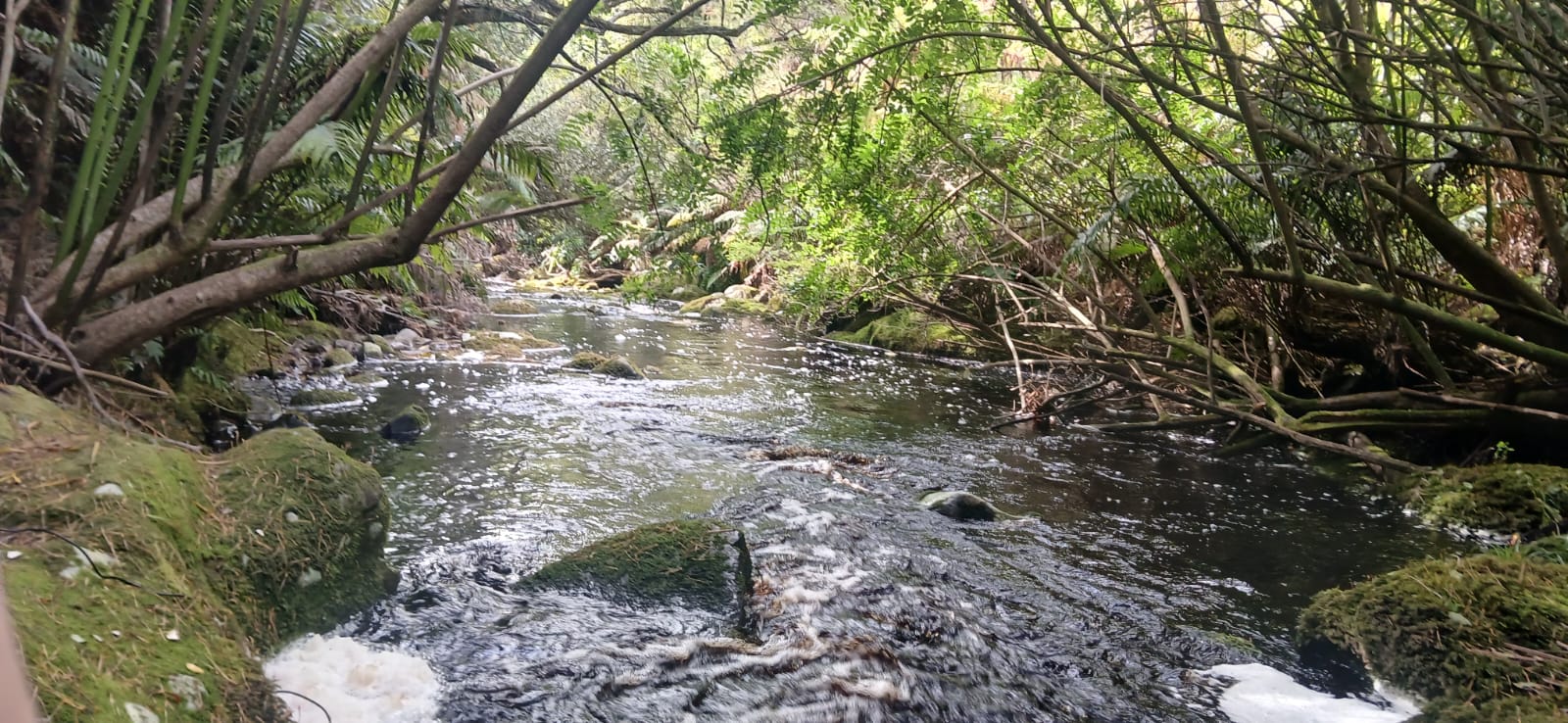
This research is one compontent of the Restoration Strategy, which will include up-to-date information on the state about our freshwater ecosystems, the coastal environment, birds and other fauna, and map our terrestrial ecosystems.